OLD POST ALERT! This is an older post and although you might find some useful tips, any technical or publishing information is likely to be out of date. Please click on Start Here on the menu bar above to find links to my most useful articles, videos and podcast. Thanks and happy writing! – Joanna Penn
You have to be a change junkie to be successful as an indie author, because the self-publishing and entrepreneurial space moves so fast.
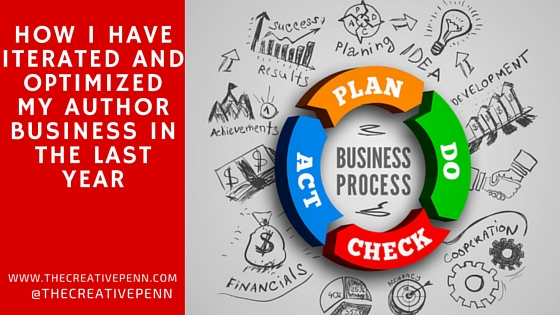 Every book we write changes us, and every year that passes, we alter the way we do things. This makes it an exciting time to be an author, and I love it 🙂
My friends, Johnny, Sean and Dave from the Self-Publishing Podcast, have just released Iterate and Optimize: Optimize Your Creative Business For Profit. It contains insights on how they have grown their business in the last few years since Write. Publish. Repeat, and it is definitely worth a read.
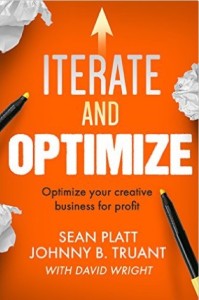 To celebrate the release, I thought I would give an update on how I have iterated and optimized in the last year.
(1) Moved to dictation for first draft writing
After several attempts over the last few years, I finally got to grips with dictation and used it to write Destroyer of Worlds in Jan/Feb. It was mainly a mindset shift from “I'm not the type of author who can write by speaking,” to “I AM the type of author who can dictate her books because it will make me faster, better at dialogue and it's necessary for my physical health.”
Once I made that mindset shift, the practicality was actually pretty easy and I cracked it in a few days. I “trained my Dragon” by reading my own books to it, and the software adjusted quickly.
 When dictating in my home office, I use Dragon Dictate software on the Mac with my ATR2100 podcasting microphone and I dictate straight into Scrivener. While out walking, I use the Voice Memo function on my iPhone and then drag the mp3 file into Dragon's Transcribe function. After the dictation session, I will do a quick pass to check any major issues and then carry on. I did 60,000 words in 30 days, and I didn't work every day, so my ‘writing' sessions went from 2000 average up to around 3500 words per session.
If you want to know more, check out this interview with Monica Leonelle on How to Dictate Your Book, this interview with Elle Casey where we talk about starting out with dictation, this interview with Ben Greenfield on how I shifted and other health benefits, and I also recommend The Productive Author's Guide to Dictation by Cindy Grigg.
(2) Re-titling and re-covering books
In Iterate & Optimize, there is a lot of discussion about re-titling and re-covering books, as well as rebranding by imprint and even author name, in order not to confuse readers and also to invigorate sales of books that just aren't moving.
I absolutely agree with this and it's something that traditional publishing does all the time. You will often see new covers on perennial classics just to get renewed attention, and as indies, we have the ability to do this far more easily than traditionally published authors.
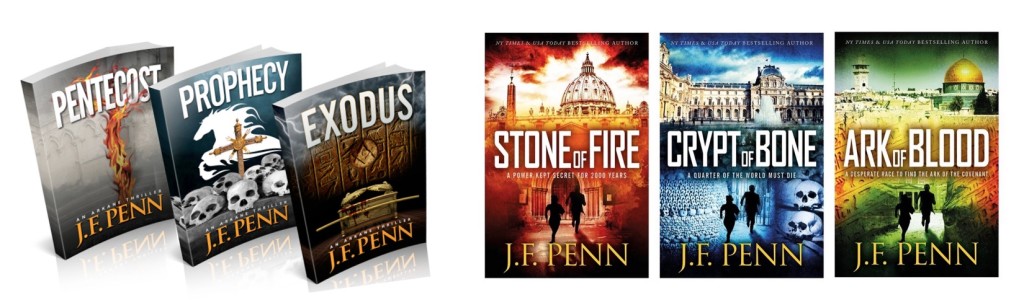
Last April, I changed the titles and covers of my first 3 novels, as per below. This article goes through how to do it. Re-covering is easy but re-titling is more difficult, especially with print, but I am very glad I did it. I think you'll agree that the change was a good one.
But I haven't stopped there! In the last month, I've released a new cover for Desecration, part of my London Psychic trilogy which falls through way too many genre gaps and thus is hard to define. But I'm thrilled with the new cover and it fits nicely with the trilogy. Here are the 3 covers it has had in its life so far.
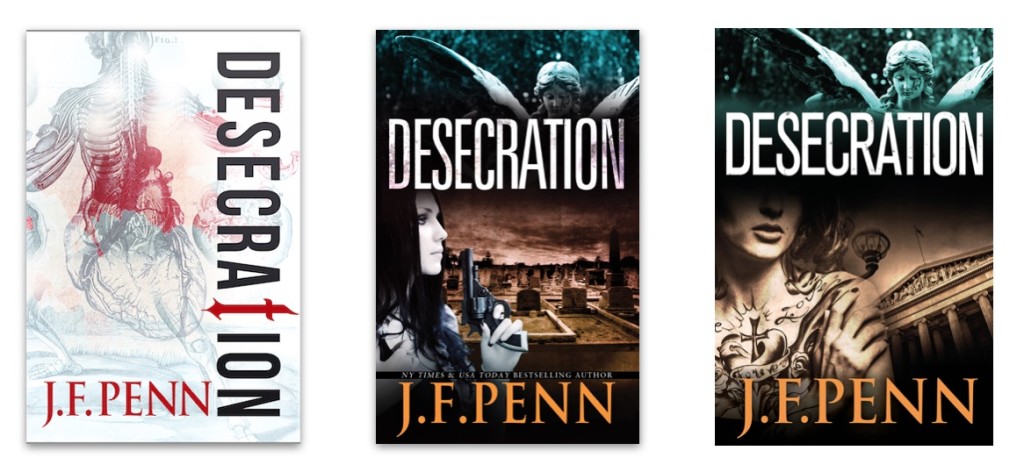 I thought the original book might be a stand-alone and I still love the anatomical cover (by Derek Murphy at Creativindie), but it didn't fit the darker colors of a crime thriller cover. So we redid it to represent the female detective aspect, but recently redid it again (Thanks to JD Smith Design) to show the tattoo side of the trilogy and also the fact that in the UK, detectives don't carry guns 🙂 and I was getting comments from UK readers about the cover. [Note to Amazon, Kobo, iBooks: Please can we have country specific covers!].
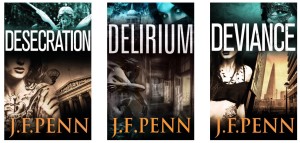 The new cover also fits nicely with the rest of the trilogy so I am super pleased with it. So often, we don't know what we're doing when starting with new characters and a new project, so it's natural that we will evolve over time.
(3) Moved to weekly podcast schedule and Patreon
We all have a limited amount of time in the day and we get what we focus on. Podcasting takes a huge amount of time and energy. You have to find and research guests, do the interview itself then the editing, show notes and the marketing of the show.
It's about 4 hours work to create a one hour show. 4 hours that aren't spent writing …
So I considered giving up my podcast in 2015 to spend that time writing more books instead. But in the end, I doubled down and moved from an ad-hoc show to a weekly show.
 I added a more personal segment where I read out tweets and emails from listeners and I also added Patreon support, where true fans of the show can support with even just a couple of dollars per month. The money is an incentive but the interaction I have with these particular fans is even better. Plus, they get an extra monthly Q&A audio, just for Patreon supporters.
Thanks to the Sell More Books Show for giving me the idea for the personal segment, which they do through comments, and also to the SPP boys for the weekly show nudge.
It's all about habit formation and having a show that drops every Monday has grown my audience substantially, and the listeners are happier. Podcasting is also a great way to build community in an authentic manner.
The Creative Penn podcast is now at 260 episodes and since I started it in March 2009, I think it is the longest running podcast in the self-publishing space. You can check out the backlist episodes here, or subscribe on iTunes or Stitcher. I also put all the interviews on YouTube if you prefer video, although you don't get the personal intro that way.
(4) Audio and print focus
I've been doing audio for a couple of years now, taking advantage of ACX to do royalty split deals with narrators, but also recording my own audiobook for Business for Authors: How to be an Author Entrepreneur. It was super hard work but I'm intending to do this again for my book on Author Mindset, coming later this year. I think non-fiction read by the author is just more intimate.
 I've also had a penny drop moment around print products, thanks to the lovely Meg Cowley for this interview on adult coloring books.
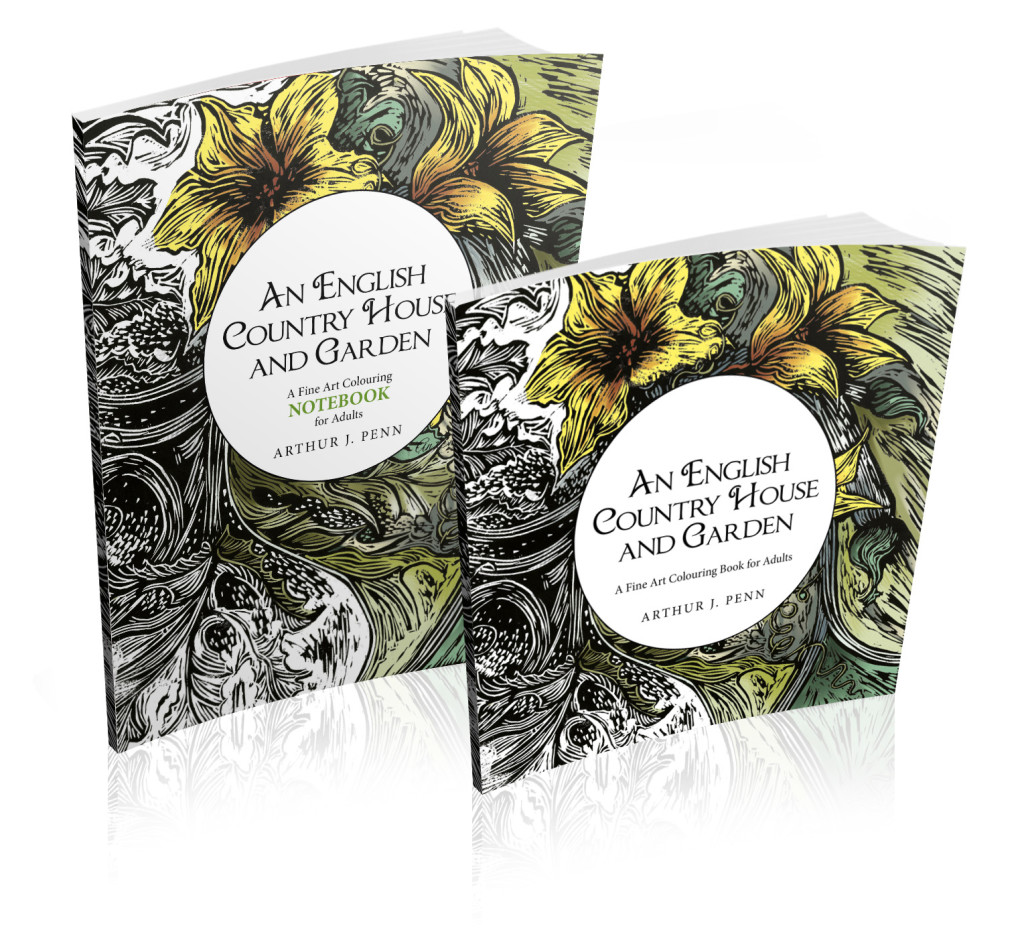
I've been doing print-on-demand for all my books, but have recently expanded into collaboration with my artist Dad for An English Country House and Garden Fine Art Adult Coloring Book. We've also done a companion A4 adult coloring notebook version, and this was so easy to do that I'm planning to do notebook versions for a number of my other non-fiction books.
I'm also considering other artistic products and if you're a visual artist as well as a writer, then check out Art Inc by Lisa Congdon, and also this interview with Lisa about how she runs her artistic business.
We are only constrained by our imaginations at this point! Don't think you have to publish in one genre, or one medium. With technology options these days, it is pretty easy to get into these more physical products without a big outlay.
(5) Collaboration, co-writing, using a virtual assistant and working with my husband
I'm a loner. Always have been.
 But in the last year, I've learned a lot about collaboration and it's definitely the way to grow and scale a creative business. You can't do everything yourself. It's just impossible.
I've had a team for a while who I contract regularly for editing, book cover design, graphic design, accounting etc. I also have a virtual assistant who does a lot of my images, podcast transcription formatting, research and more.
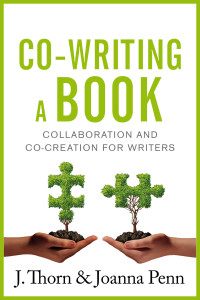
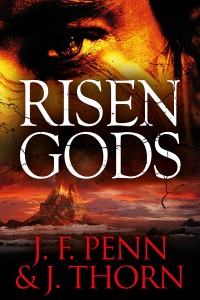
But in 2015, I finally co-wrote a novel, Risen Gods, with J. Thorn. You can listen to us talk about it in this interview, or check out how we did it in our Co-Writing book. It was a fantastic experience and I intend to do it again.
 Then there's the coloring book with my Dad as above, which is a creative joint venture and a model I intend to continue (with very select partners as I don't intend to become a larger scale publishing company).
My husband, Jonathan, also joined the business in September 2015 and after a period of adjustment, we're now working on expanding his role into new creative directions. Plus, he is handling my advertising, as below. I'll be sharing more on that personal side at some point. I might even get him on the podcast 🙂 Suffice to say, it's been an adjustment for this loner creative!
(6) Use of paid advertising including Facebook Ads
 I've focused on content marketing for the growth of my business over the last 7 years, providing useful information and inspiration for free in order to draw people to the site and start to build a relationship with them before asking for a sale. This is the same principle behind a perma-free first in series for fiction authors.
But in the last two years, I've seen authors streak past me in terms of financial success and they've all done it based on paid advertising.
So in the last few months, I've (finally) got serious about paid advertising to grow my email list and sell more books and products. I'll be doing a more detailed post on this in the next few months when I have specific results to share.
For more on this, check out this interview with Mark Dawson on Facebook Advertising and this interview with Adam Croft on how he boosted his books with Facebook Ads.
 (7) Sorting out social media images and scheduling
Everyone has their own favorite social network and mine is Twitter, although I also have a presence on all the big sites. I've been using Bufferapp for years now to schedule updates with articles I find on my RSS feed every day.
But after this interview on social media with Frances Caballo, I knew I needed an overhaul. It just took me a while to get it sorted 🙂 You know how long those To Do lists can get …
But finally, I've added Social Media Warfare plugin, which has made my posts and podcasts much easier to share with pretty images to go with them.
I've also invested in MeetEdgar.com which enables evergreen content to be posted more than once. The main problem with Bufferapp is that you need to constantly top it up with content, whereas MeetEdgar can be loaded with a library that can be repeated over time.
 I have a LOT of content, over 1200 articles, videos and audios so I need a way to keep traffic going to the backlist as well as the latest post. Not everything changes over time after all …
I've also been updating my main How To articles so I have renewed evergreen content to share. Check out the Publishing page, now filled with super useful tutorials, and more to come.
OK, so that's how I've been iterating and optimizing in the last year. I'd love to know what you're doing differently, whether it's in writing, publishing, book marketing or creative business. Please do share in the comments below.