OLD POST ALERT! This is an older post and although you might find some useful tips, any technical or publishing information is likely to be out of date. Please click on Start Here on the menu bar above to find links to my most useful articles, videos and podcast. Thanks and happy writing! – Joanna Penn
When you're a new writer, you tend to compare your first draft with someone else's polished finished book.
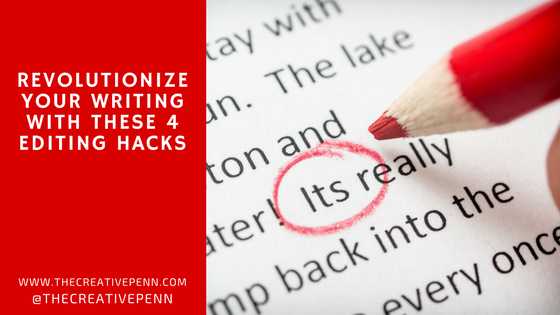 But you can't compare the two because the difference is in the editing.
Here are some tips that you could use when editing your next book from Jess Lourey and Shannon Baker.
You’ve spent months writing that book. Your work included deep research on setting, juggling Scrivener, notecards, and airplane glue to get that plot just right, and diving so deep into the head of your character that you were dreaming her dreams. But now you’re done. Those 90,000+ glorious words are laid out, one after the other, a beautiful first draft.
Time to get an agent or self-publish, right?
Nope. Now it’s time to edit.
Personally, I love editing. It’s like I’ve lugged all the wood, cement, and nails needed to construct this house, and now I get to decorate it.
Other writers hate the editing process, though. They just want to be done with the book already. Whatever camp you’re in, you can make the editing process (even) better by adopting these four editing hacks that Shannon Baker, author of the latest in the Kate Fox mystery series, Dark Signal, and me, author of the recently-released humorous mystery March of Crime, swear by.
Editing Hack #1, from Shannon:
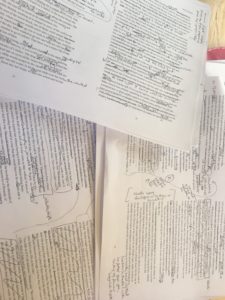
I’m visual, so when I finish my draft, I synopsize each chapter in Scrivener’s corkboard, print it out, and tack it to a real corkboard. Then I tag the ¼ , ½, ¾ places so I can make sure I’ve hit turning points and twists to keep the pace flowing. I can color code point of view and track subplots.
From there, it’s a matter of making revision ideas with sticky notes, and starting in on the rewrites.
Editing Hack #2, from Jess:
Read your book out loud. I know you’ve heard this hack, and you’ve discarded it because it’s dumb, right? Your eyes can see your book just fine so why would you bother reading it loud, which is dorky and uncomfortable. This is why:
“I cnduo't bvleiee taht I culod aulaclty uesdtannrd waht I was rdnaieg. Unisg the icndeblire pweor of the hmuan mnid, aocdcrnig to rseecrah at Cmabrigde Uinervtisy, it dseno't mttaer in waht oderr the lterets in a wrod are, the olny irpoamtnt tihng is taht the frsit and lsat ltteer be in the rhgit pclae.”
You see what your eyes did? They made sense where there was none.
Your ears will not let you down that way. They are parabolic workhorses that will tell you when your flourishes are overdone, your rhythm is too consistent, your grammar not quite right. Read out loud. You gotta.
(Shannon here: Thank you for explaining that to me! I know you’re supposed to read it out loud, and I do, but now I won’t feel so silly about it.)

Editing Hack #3, from Shannon:
We all have crutch words. Common little parasites can include “just,” “that,” “how,” and “with.” My characters smile, nod, half-smile, and turn entirely too much. My latest book contained these culprits: clenched, disgust, dark, dark clouds, place, put, but, get, sat [houses and cars don’t sit], have, look, stride, strode.
Search and destroy.
Or, if you are typing in Word, find and replace.
I always do a search for “I saw” (thought, looked, etc.) if I’m writing first person. “She saw” (etc.) if writing third person. Generally, your point of view will be closer (therefore making your readers feel more infused in the action) if you eliminate those phrases.
Editing Hack #4, from Jess:
This editing hack, which I call the ARISE Method, was a game-changer for me. I developed it when writing Salem’s Cipher, my feminist thriller, in the fall of 2015. The book is intricately-plotted with four character POVs, multiple subplots, and 8 different settings. I needed a way to keep all that in play, and so I developed ARISE editing. The foundation of this method is that every scene in your novel must serve at least one purpose. It must offer the reader:
- Action
- Romance or Humor
- Information
- Suspense or
- Emotion
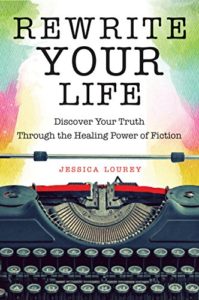 I go into more detail about the method in my book Rewrite Your Life: Discover Your Truth Through the Healing Power of Fiction, but here it is in a nutshell.
- Summarize each scene of your novel in three or fewer sentences.
- Write those summaries on a notecard, one card per scene. If you have multiple POVs in your novel, dedicate a specific color of notecard to specific POV. So, for example, all scenes from Chuck’s POV will be green, and all scenes from Clara’s POV will be yellow.
- Review the notecards, and put as many of the ARISE letters as fit into the upper right corner of each notecard. If the scene has romance, pencil in an R. If it also has emotion, pencil in an E, and so on.
- If a scene has no letters, chuck it, no questions asked. If it only has one letter, consider what you can add to it to give it at least two. Pencil in a note to yourself on that card. If it’s got at least three letters, it’s golden.
Revise your manuscript based on what you’ve discovered in the notecards, and bizango! You have a neat, sweet, guaranteed page-turner on your hands.
(Shannon here: I’m SO going to use this on the book I just finished! Thanks for this.)
Do you have any favorite editing tips? Please share them below and join the conversation.
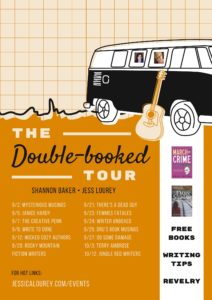 Please join Shannon and Jessie as they continue their blog tour. They will each be giving away three books this tour, and every comment you leave at a blog stop gets you one chance to win.
 Jess Lourey (rhymes with “dowry”) is best known for her critically-acclaimed Murder-by-Month mysteries, which have earned multiple starred reviews from Library Journal and Booklist, the latter calling her writing “a splendid mix of humor and suspense.” She is a tenured professor of creative writing and sociology, a regular Psychology Today blogger, a sought-after workshop leader and keynote speaker who delivered the 2016 “Rewrite Your Life” TEDx Talk, and the author of Rewrite Your Life, the only book out there which shows you how to turn your facts into healing, page-turning fiction. You can find out more at jessicalourey.com.
 Shannon Baker is the author of the Kate Fox mystery series (Tor/Forge). Set in the isolated cattle country of the Nebraska Sandhills, Kirkus says, “Baker serves up a ballsy heroine, a colorful backdrop, and a surprising ending.” She also writes the Nora Abbott mystery series (Midnight Ink), featuring Hopi Indian mysticism and environmental issues. Shannon makes her home in Tucson where she enjoys cocktails by the pool, breathtaking sunsets, a crazy Weimeraner, and killing people (in the pages of her books). She was voted Rocky Mountain Fiction Writer’s 2014 Writer of the Year. Visit Shannon at Shannon-Baker.com