Podcast: Download (Duration: 1:14:21 — 60.3MB)
Subscribe: Spotify | TuneIn | RSS | More
Branding helps readers find your books and enables you to build a long-term career as a writer – but many authors get branding all wrong. In today's show, Kristine Kathryn Rusch explains what branding really is and how to build your author brand in the most sustainable way.
 In the intro, I talk about watching the demographic shift in action – from Boomers to Millennials, who are now the largest living generation in the US.
From old media to new media: China Literature buys a movie studio [The New Publishing Standard], and The Digital Reader reports that Amazon might buy a movie theatre chain, which was also a rumor after Netflix was shut out of the Cannes film festival [The Verge], plus Facebook is expanding their network TV with Watch, as discussed on the Unemployable podcast with blogger & podcaster, now Facebook TV host, Lewis Howes.
Getting off the hamster wheel: New media models mean monetisation of content has also grown exponentially, and now it's having mental health repercussions. The Financial Times reports on YouTube vlogger burnout, with creators moving from view-based ad revenue to subscription models like Patreon in order to stop the constant production. Kris Rusch has a post that reflects on the hamster wheel of doom for authors who follow a similar path in the author space.
 Today's show is sponsored by Draft2Digital, where you can get free ebook formatting, free distribution to multiple stores, and a host of other benefits. Get your free Author Marketing Guide at www.draft2digital.com/penn
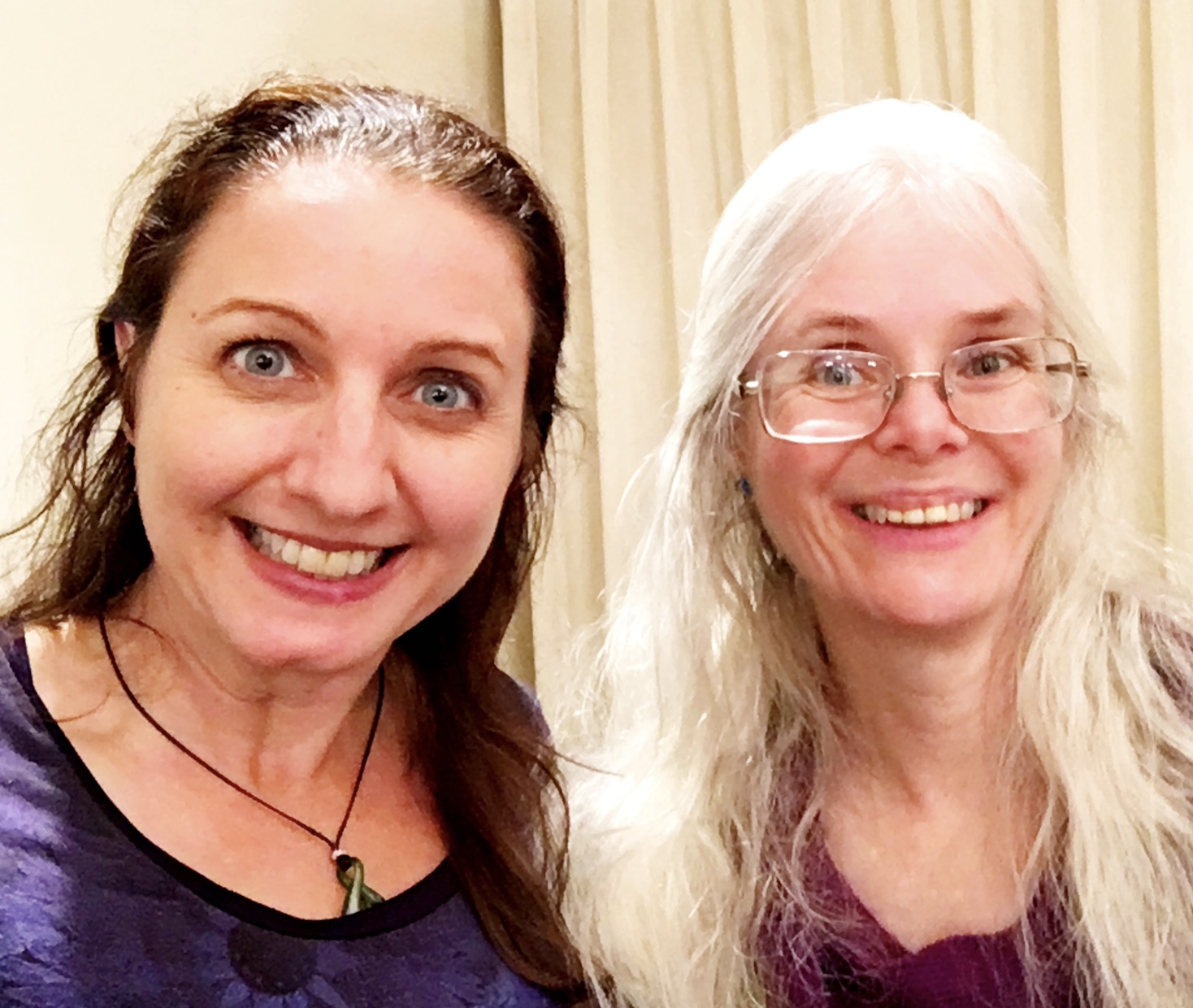
Kristine Kathryn Rusch is an international best-selling and multi-award-winning author of so many books in so many genres under many different names.
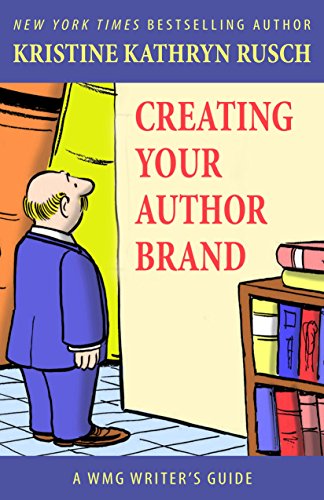
She's also an award-winning editor and her weekly business Rusch blog posts at KrisWrites.com are essential reading for Indies. Kris's latest non-fiction book is Creating Your Author Brand.
You can listen above or on iTunes or Stitcher or watch the video here, read the notes and links below. Here are the highlights and full transcript below.
Show Notes
- When to think about author branding and when to leave it alone
- What ‘author brand’ means, and what it doesn’t
- When to use different author pen-names for different genres
- Honoring your readers and the author name they’re used to
- Communicating clearly to readers about where a series book fits in their awareness of your writing
- The basics of author branding and why consistency matters
- How to encourage readers’ loyalty to a brand
- What goes into an author’s brand mission statement
- The difference between brand image and brand identity
You can find Kristine Kathryn Rusch at KrisWrites.com and on Twitter @KristineRusch
Transcript of Interview with Kristine Kathryn Rusch
Joanna Penn: Hi everyone. I'm Joanna Penn from thecreativepenn.com. And today, I'm back with Kristine Kathryn Rusch. Hi, Kris.
Kristine Kathryn Rusch: Hi, Joanna.
Joanna Penn: It's great to have you back on the show. It's actually been almost exactly a year, so it's very cool to have you back.
Kristine Kathryn Rusch: Thank you. Yeah, I noticed that on the Skype little notification that said it's been a year, and I'm like, “Wow…you mean like it's been that long?”
Joanna Penn: Exactly. Well, just a little introduction if people haven't heard of Kris.
Kris is an international best-selling and multi-award-winning author of so many books in so many genres under many, many names. And it's really hard to encompass everything Kris writes. She's a mentor to me, a creative mentor through her books and workshops, which I've been to in person and taken online, and she's also an award-winning editor and her weekly business Rusch blog posts are essential reading for Indies. And I just Tweet them as soon as they come out.
Kristine Kathryn Rusch: I appreciate that.
Joanna Penn: They're always amazing.
Kris's latest book, is called “Creating Your Author Brand.” And we're going to talk about this today because I think people have in their heads one idea of brand, but Kris, let's start.
Why is it important to think about branding wherever you are in your career, whether you're starting out or whether you've written as many books as you have?
Kristine Kathryn Rusch: Well, let's back up for just a minute and talk about the fact that we're talking about the business side of publishing, not the creative side. Don't think about branding at all while you're creating. Just write what you want to write and then worry about it.
Now, after that, then you need to think about how people approach books and you need to think about it from a reader's perspective? You're a commercial artist, and commercial stuff, people buy it in commercial venues. So, you need to be commercial. Part of being commercial is a brand.
For authors, what you really want is your brand to be your name so that they know when they pick up a Kristine Kathryn Rusch book, or a Joanna Penn book, that they're going to get a certain kind of book, or a certain kind of voice.
That doesn't mean you have to write the same thing over and over again. And, in fact, a lot of writers don't. But people appreciate their voice.
I think of Stephen King. Everybody thinks he's a horror writer, but he's not. He's a mystery writer. He's a horror writer. He's written some mainstream novels. He's written some non-fiction, but his voice is always there.
And you know when you're getting Steven King, you're going to get kind of an unflinching look at life with that wry main voice in it. And that's the brand you go for.
It's going to be hard for you to figure out who you are as a writer, as a brand. So ask your readers, ask people why they pick you up, or just look on your reviews and they'll tell you. They'll say, “I pick up Joanna's books because they do X.” Or “I love the adventure.” or “Because she's really good at this.”
I've been doing this for over 30 years, and I occasionally see something and it says, “Rusch is really great at this.” And I'm like, “Huh, when do I did that? I didn't know that. Wow, okay.”
I just put it in the mental marketing file, not in the writing file because I'm just writing for me. So I really want to be clear on that. The whole thing we're going to be talking about today is the business part, because otherwise, you're really gonna freak out.
The place people make mistakes is they think they're going to have to write the same thing over and over and over again, and that's the brand. The brand is a multi-layered part of what you do in marketing. It's your name. If you're writing in this series, it's the series has its own brand.
Each book has its own brand. Each genre has its own brand. And you've got to think about all of that as you're putting it together. And I'm just talking about covers now. There's other aspects to branding that go along with it, and who you're branding for and who you're writing for and all of that. And I'm sure we'll get into that today.
Joanna Penn: For people on the video, I was kind of thinking that this would be a short book. Actually, it's longer than expected, and that was a surprise to me. And I wanted to ask you about that.
I think you often, you'll start writing on a topic on your blog and then you'll realize there's a lot more to say than expected.
Why did this turn into such a big project? Is it because authors just don't understand branding?
Kristine Kathryn Rusch: It became really big when I wrote a blog post and I said, “You guys are doing branding wrong,” because something set me off. All my books come from one post from the weekly business blog. And so, I wrote this post and I've got questions in email and in the comments that basically said, “What's this? Or, what's this? What's that?”
Each person had a different thing that they were asking what about. And I realized, “Oh, I know more about this than I thought I did.”
And where I thought people were at a basic level. I was actually speaking to be intermediate or advanced level, and they don't even know the true basics of it. I've been in business, I own a lot of businesses, not just writing businesses. And I've had a retail businesses, gosh, since I was in like 20.
So, this stuff is kind of hard-baked into me. I used to work in advertising and I didn't realize how hard baked the branding part of it was until I started getting these, “Wait a minute. I don't even understand what you mean by whatever.”
Each chapter in that book is one of those questions. I just wrote 'em down and went, “Okay.” And then as I started writing it. I try to keep the blog posts, which are too long. Everybody says they're too long. You know, you should have 500-word blog. And I have 3,000, word blog.
Joanna Penn: I love them.
Kristine Kathryn Rusch: They're kind of an adventure and I can try not to go past 3,000 words. So I get to 3,000 words and realize, that was just the introduction to that topic. “Oh, crap. I've got to do more.”
And then so I have this part of the blog, part one, part two, part three. And I put them together in a single chapter and under a single heading. But sometimes they were a month's worth of blogs, weekly blogs just to get that one topic.
Joanna Penn: I think that's why I was surprised. I thought I understood branding. I really did. And then I was like, “Oh, okay. This is a lot bigger.”
Let's come back to the author name because I think everyone gets that an author name can be a brand. So like J.K. Rowling, Kristine Kathryn Rusch is a brand. But you have loads and loads of names and part of that comes from traditional publishing and writing under for a long time under different names.
But this is the biggest thing I think is an issue, is this difference between names. Should you have different names? Should you have different genres? How does that work with the kind of big data? Also bought algorithm stuff.
Could you break down what is in an author name brand. And what are the important aspects there?
Kristine Kathryn Rusch: Well, first of all, it's personal what you decide to do. Whether or not you want to have an author brand and have it be all-encompassing. Or if you want to have it broken down into sub-genres or something.
Now, if you do a wildly diverse things like writing for three-year-olds and middle grade and writing erotica, have different names. I mean, it's too dangerous. It would get you kicked off of platforms and other things. So, be sensible on that.
But if you're writing erotica and soft romance, sweet romance, then you may or may not. You might want to do something different with your covers and keep the same name so that your readers know, ‘Oh, that particular series, I don't like it because it's erotica and I only read sweet.” And vice versa. But that's a personal choice.
For me, some of it I was forced into because, as you said, traditional publishing. I've had this very long career, and I had mystery name Kris Snell Scott, which is established and I had a romance name, Kristyn Grayson, which is established.
I'll be really honest, it's annoying, because I have all of this old work that needs to come out and I could put it all under Rusch, but there are a lot of people who only like those names and only go to those names.
And so, the annoying part is I have to build each one of those in the indie world in its own way. And then if I wrote a mystery novel and it's about some of the issues that Kris Snell Scott deals with, but it's in a different time period. Is it a Kris Snell Scott book? Or is it Kristyn Katherine Rush Book?
And that's me looking at it from after I'd been creative, and I look at it and go, “Hmm. Which is it?” And it's hard. There are times when J.D. Robbins and Nora Roberts wrote a book together, I mean, she's the same person. But it's kind of one of those cross-author things. But it's me. I don't know. How do I market that?
It gets confusing and if I had it to do all over again, I'd still keep Kris Snell Scott separate, but I don't know about Kristin Grayson. She felt pretty much in the Rusch categories. But I'm stuck with it.
And some of you who are listening to this are stuck because you've been traditionally published or you've already made the choice. So honor your fans. Don't switch and go, “Oh, well, never mind. That name is dead.” Honor your fans. There are readers who only read that name, so let them have their name.
Joanna Penn: I have noted like I just picked up a book the other week called “The Hell Candidate” by Graham Masterton. And then I realized it was Open Road Media that was published in the 70s under a name that he had written under back then, and they had released it under Graham Masterton, which is the name he's known as now.
Is that a possibility for people who have got their rights back, for example?
Kristine Kathryn Rusch: Absolutely. But with that particular name for Graham Masterton, it was a dead pen name. It doesn't have a living, breathing fan base. So, he could easily do that. I've done that. I have a couple of dead pen names and I've moved them over to Rusch, and that's fine. But with the existing pen name, that's a different story.
Joanna Penn: Then, you mentioned voice, and that to me is the voice in the series branding thing to me in my head becomes difficult, in that what you say about the voice being kind of consistent across genre, and yet you still have fans who like different series.
How do we bring the promise? Branding is a promise to the reader in some form.
How do we do the promise with the voice but offer different genres?
Kristine Kathryn Rusch: It's really simple. Your voice is your voice. Your perspective is your perspective. It seems really normal to you because you grew up with it. That's how you see the world and the way everybody else sees the world is weird because they're not you. So that voice is baked into you. That is who you are.
You will put that voice, no matter what you write into what you write, it will be there. It's not something you layer on. It's not something you can add. It is essential you and it's right there. And you don't have to worry about it. It's just going to be there. So, that part is fine.
You're telling a different story. And when you're in a different genre, you may have a different tone, you may have used different words, you may not have its quality of language, but it's still going to have that essential you. And the really tough part about that kind of voice, you're not going to recognize it. It's you. It's how you see the world.
My husband is Dean Wesley Smith, and he's my first reader and he gets really happy when I say, “Oh, this book is so boring. It doesn't have anything in it. It's so normal.” And he's like, “Oh good, that's going to be a really voice-powerful book.”
And I'm like, “What do you mean?” He's like, “Well, to you, it's like that's the way the world is. And to me, it's like, “Wow, this is going to be really strong.” And he's usually right, but it's annoying.
Joanna Penn: That's awesome. I do your courses obviously, and you both, I'm sure you don't watch him talking about his course. Sometimes he talks about your books. And it's really interesting to get the perspective of someone who loves you, but obviously loves your writing as well as a first reader. And he was talking about that and how the voice was so important.
Just come back on the series, then.
How is series different in terms of branding apart from covers?
Kristine Kathryn Rusch: A series has its own layers. It has its own true fan, and then it has the people you want to bring in. And so, with the series, you're going to need to have the genre correct. You're going to need to understand where it fits. You're going to understand what people want or don't want in that particular series.
Not that you're writing for them, but when you're marketing. The large book I'm finishing right now is not using my regular characters in my series. So, I know when I'm branding it and when I'm marketing it, I'm going to have to let the true readers know, “Hey, this is a different product in the world, but it's not with the main characters.”
And then I have to let brand new readers know, “Hey, this is an entry book. You can come in even though it's book 85…”I'm just kidding. It's not 85, but it feels like 85 because I'm working on this forever. Even though it's a book deep in the series, you can start here, because there's nothing you need to know from the entire series.
That's part of branding, that's part of marketing. We'll do some different stuff. We'll do some different advertising that way. And yet, we want to make sure that when readers come to get the books, they can look at them and go, “Oh, this series looks different with covers.”
The marketing stuff on the back is different. The advertising stuff that we do is different. Just the font, the way that we deal with it, the interiors, everything is different from say, my retrieval artist series, also science fiction, but it's not at all, the same, in tone or in scope or anything else.
Joanna Penn: I'm really interested that you mentioned an ‘entry book'. I know you haven't started marketing this book yet because it's at that stage.
But that to me is really important because like I feel like I have to have become a better writer since that first book. And now I've got lots in a series, and I would really like an entry book. Again, I feel like every one is an entry book.
How are you showing that is an entry book apart from just saying you can read this as a new one?
Kristine Kathryn Rusch: We promote it differently. We promote it saying, “Have you always wanted to go into Kristine Kathryn Rusch's diving universe? If you have, this is a book to come in with.”
We're doing that right now. I've got a book called “The Fall”, which is an entry book into the diving universe, and it's in a story bundle, which is storybundle.com. You guys, you can get it for $15, all that stuff, but it's an entry book, because it doesn't use the regular characters. It's a murder mystery that's in this big, wide, space-up kind of world, and it's different.
And it's got a slightly different look. We're doing different promotion on it than we would do. The book I have with diving that's coming out in the fall, it's called “Searching for the Fleet.” Now, that has the regular characters, and it'll actually be the advertising, the branding, all of that stuff is going to be geared to the fans.
“Did you want to know what happened at Coup and Yash on this particular day? Did you wanna know what they're doing?”
The title itself, searching for the fleet at the fans who have read the series know. “Oh, my goodness. We're finally to that part.” But people who've never read it before, would be like, “I don't know what that means.” So, it's a whole different way of looking at things. I hope that will do.
Joanna Penn: It does. I've never heard it called an entry book before. So even though I should have heard that, it just clicked with me.
Coming back to branding. One of the things that I think people get confused about is they think it means a logo. So either a logo for that author website, or a logo for an imprint.
Is it at all important to have some kind of logo, like you have a logo for WMD? Is there such a thing for just an individual author?
Kristine Kathryn Rusch: Sure, you can have that. What branding is about is consistency. So, you have to make some decisions.
First of all, you have to write down all the things that you can brand. Your name, your series, if you have one, the genres that you're working in, the books that you're doing. All of those things.
You write that all down, and then you figure it out. And then each one should have a slightly different look to it and your author name should be consistent on all of those things, but in a different font, in a different logo, your marketing will be different.
And each one, you spend time thinking about how that works. And you break it all down. It's not just one thing. Branding is essentially everything in marketing. It is what it's all about it. If you're not consistent from the top down, then you're not doing it right. Does that make sense?
Joanna Penn: Yes. I don't know who said it, but someone said, “Everyone has a brand. You might not know it, that if you haven't created the brand, other people are going to create it in their mind for you.”
Kristine Kathryn Rusch: They'll do that anyway. And here's what traditionally published writers who started out or had a publisher for a while, or had hired a cover artists without giving them any direction.
That's what Indies do. They don't give them any direction. That person has created your brand. And the thing that irritates me the most as a reader is that traditional publishing houses don't think about branding anymore because they've lost the sense of marketing 100 years ago.
They're doing it right on Stephen King now. But if you look at somebody who's had a long-term career and it's not a big career like Stephen King, it's just somebody that has been around for a long time. All of their books look different. All of their series look different.
Somewhere in the middle, some new editor comes in and goes, “Oh, these don't look very good anymore.” So they switch in the middle of the series and they make it look different than the previous books in the series.
And that confuses readers because what you're talking about is buying habits, and you want people to catch.
Let's just talk about stores for a minute. As they're walking by, you want their eye to catch that familiar shape that is slightly different, the familiar font. And they go, “Oh, look. It's the new Joanna Penn Book. Oh, my gosh.” And they pick it up.
On Amazon, you want them to be able to look at the book that's displayed and know that that's another book in the same series as opposed to an older version of the same book, or a German version of that book. It's a different cover.
You don't want them to spend a lot of time digging around, rooting through your backlist, going, and “Does this book fit? Do I already have this book? Where does it go?” You want to be really clear and consistent.
Joanna Penn: That word consistency. It's so funny because I feel like you talked about voice being something that just happens; it's part of who you are. And that consistency, I think does almost change as you get interested in other things as a writer and you kind of move into different things.
I wonder how much that consistency is there. And you have talked a bit there about readers and loyalty.
Apart from consistent branding, and consistent delivery of story, what are some of the ways we can encourage readers' loyalty to a brand?
Kristine Kathryn Rusch: You have to tell them a good story. That's the bottom line. I know you said besides, but that's not a besides. That's the important thing. They're going to be loyal to you if you tell them a good story.
Readers are used to being kicked around by traditional publishing, they really are. They have to figure out whose book is what. If you make it easy for them, that really helps.
The thing you have to realize as a writer is that you're never going to have the same number of readers from book to book. You will grow your readership, but you will also lose your readership, and you will lose readership because they didn't know that the book came out, or because somebody got ill, or they died, or they had an income, something, they lost their jobs and now they're going to the library to get your book. They're still reading you or they're borrowing their friends' copy, but they're not picking up the book anymore.
If you only write for the same group of readers, your readership will go down. You constantly have to bring in new readers and entertain them and give them entryways in and make it interesting on the writing side, and also make it inviting on the marketing side so that it doesn't look so daunting.
Honestly, I don't like Amazon decision to take whenever you have a book and say, “Oh, it's book 85 in the series.” Because, it may be an entry book, and people are going to think book 85 in the series. And that's Amazon's decision. That's not our decision. We can't stop that.
Again, we're having algorithms and other stuff get in our way. And so, we're going to have to fight that in our own ways and figure out how to do that in branding or in our own marketing.
When you're doing marketing on branding and with your series, or with your name, it should look the same.
Think about movie marketing. Hollywood and the movie people are really good at this. You see a book that's related to the movie, it has the cover, the poster art, you see the ads, they were very consistent. The fonts are very consistent.
You go to the movie and you go sit in the movie and you see that the same fonts that were in the ad were in the movie. It's just straight down the road. If you get chotchkies that they give away, like towels or something, it looks like it belongs as part of what they're doing. It's all consistent. And that's really what you want to be doing. System. Top to bottom.
Joanna Penn: I've only been doing this a few years really. And yet, when I think about having to kind of go back. I know for some people it's a big thing, right? To kind of look at back at things.
How many books do you guys have? 400 or something?
Kristine Kathryn Rusch: I don't know how many books I have, but somebody told me, Allison who runs WMG, told me I had 400 short stories. And I know that's true because I put up a short story for free every week and for four years, some will see more than that. I didn't repeat a story.
Joanna Penn: Wow. The one thing that I really struggle with, because I write in lots of different genres like you do, it's this tagline thing. I really wish I could come up with a tagline.
You have some great ideas about how to do this. But it seems like your struggle as well.
Kristine Kathryn Rusch: I hate it. I can do your tagline. But see, for me, when I'm writing these big books, they're big books, and I'm lost in them, and I'm gone. And so, I work with other people to get the taglines done, and to try to figure out where the book after they've read it, what is it?
Is it a murder mystery in space? Is it a funny, heartwarming little romance? And then you come up with the tagline. And it takes some work and you've got to refine it.
We tell people not to read the reviews, but I have other people read reviews for me and then look. And sometimes there are really good lines from there. They were saying, “Oh, it's a great such and so here.” And then you can take that and tweak it.
I had a terrible review on the very first retrieval artist novel out of a magazine in the science fiction field, which was very influential at the time called Locus. And they called it a cross between a Steven Spielberg movie and Buffy the Vampire Slayer.
Joanna Penn: Sounds great.
Kristine Kathryn Rusch: I went, “Why is that an insult?” Because they meant it as an insult, and I've used it ever since. And I was like, “Yeah. Okay. Great for me.”
Joanna Penn: I actually like that. I don't like reading my reviews because you'll feel devastated, or you feel puffed up. But what you're saying is you almost don't recognize your own book, like say the tagline for the book might be different. I guess what I'm also asking is this, I think you call it a brand mission statement which is upper level, which is about you as the author, I guess.
Can you talk about brand mission statement?
Kristine Kathryn Rusch: You need to know what your brand is before you can market it. It's really simple on that level. And so, if you step back and you say, “Why am I writing this series of books?”
For me, the retrieval artists, I love murder mysteries, and I love space. And so it was a murder mystery set on the moon. I'd never seen anybody do that.
And then I decided to explore all of mystery in that. So I did different forms. I did cozy mystery, and then I did detective stories and all of that inside that thing, but murder mystery in space. So, there was my mission statement, that's the retrieval artist. It is murder mysteries in space.
It's gotten a little bigger than that, sometimes it's thrillers in space. But it's still, bottom line, murder mysteries in space. The diving universe, which is also space opera in space, it's about exploring best regions of space. It's very different from the other one.
So the mission statements are short and they're easy, because that's what you're interested in.
My Kristine Grayson novels are funny, Fractured Fairy Tale. And so, there's the mission statement, whether or not that's a marketing statement is another matter.
As long as I know that that's what the essential part of those series is, I can build from there, and I can try to figure out how to make it work. You guys, when you're writing, you know why you're writing what you're writing. You know what your point is, and you can boil it down to one sentence. It doesn't have to be a snappy, witty sentence. It just has to be a, “This is what it is, kind of sentence.”
Joanna Penn: That sentence just seems so challenging. Like you've said there, they see per series that works.
Do you have one? An author name like “This is Kristine Kathryn Rusch is this.”
Kristine Kathryn Rusch: Well, Kristine Rusch is all over the map. Really, that's my mission statement is all over the map.
Kristine Grayson has to be light and funny with a little bit of fantasies and a little bit of romance. If I have to think of the tone it's those 1930s, 1940s romantic comedies with Cary Grant and Irene Dunne. It's gotta be that kind of snappy thing.
Kris Nell Scott is extremely serious in the 1960s. And if humor creeps in, I've done something wrong.
I kind of do those by tone. And mostly I can figure out what fits into those by tone. And there's nothing wrong with all over the map because there are writers.
Joyce Carol Oates is another writer who's all over the map, and the readers go with her there, or not. With writers who are all over the map, you spend a little more time as a reader looking to see if the book will interest you. “Is this one of her books I'm going to like? Is this one of her books that I'm not gonna like?”
There are a handful of readers that'll buy everything when you're all over the map. Which is fine as long as you give them a map. You can say, “This book is…I like that book, or this book goes this way.”
You do that in design. You do that in your advertising. You do that in your cover copy. And you make it easy for them. You have to step out of your writer shoes at that point and think about the reader, the writers you like to read and the ones who are all over the map.
So, you're all over the map side of things, say well, “What makes me read those books by Joyce Carol Oates and not those?” And you figure that out, and the cues, and then you reverse engineer it for your own stuff.
Joanna Penn: I think that modeling in reverse engineering is so important. If you don't have to figure it out on your own, you can just look at what other people have done. And not copy them, obviously. But modeling is so important.
Kristine Kathryn Rusch: And it's good to do it on two levels. You do the modeling on this work, or the modeling on, “Wow. That really never worked. And I'm never doing that ever, ever, to my readers.” But both are valuable.
Joanna Penn: Just to come back on your short stories, because we're actually doing your short story lecture at the moment. Because you've written so many short stories, it seems far more obvious for a novel-length work, or even a novella to fit into a clear genre.
But short stories don't seem to fit so much, but especially when you're writing so many with so many varied genres, sub-genres.
Where does the brand come in with short stories? Or do you just throw it out the window?
Kristine Kathryn Rusch: With my short stories, for the most part, it Kristine Kathryn Rusch. So I'm lucky it's all over the map. We just go with the genre when it's done. And when it's done, Dean reads it, and he's great with genre. So, he helps with that.
But a lot of times I write the short stories for a market. I wrote it for Asimov, which makes it automatically science fiction. Or I wrote it for Clarkesworld, so, it's maybe time travel and fantasy or steampunk, or I wrote it for one of the mysteries and mystery magazines.
Or I wrote it for some weird anthology about leprechauns. Occasionally, I can write mainstream literary fiction, and those are harder to market because those are harder to write words about, and they're harder to do. But that's kind of a guide for me. But other than that, I've just tossed the short stories into all over the map category and let 'em go.
Joanna Penn: Now, that's cool. I like all over the map. I think lots of us with that tagline.
If people listening are feeling like they are saddled with a brand they don't want, how can they pivot without throwing all the books out? How can they pivot that brand?
Kristine Kathryn Rusch: They need to figure out what they want to do, and how they will market it. I know I mentioned in the book, there was this woman who wrote to me in great distress a number of years ago, because she was writing very funny books with robots.
She was marketing them as chick lit, and the chick lit readers were mad. They were furious. Her tone was chick lit. Her books were chick lit, but they have robots. And the chick lit readers did not like robots.
I told her you've got to pivot, this is chick lit with robots, or this is science fiction chick lit or whatever. And she did and it worked. But she could have pulled everything down and then started over. Don't do that. You're going to lose all your algorithms. You're going to lose your history, you're going to lose everything else.
You guys have been through this with your favorite writers. You've watched it. They moved to a different traditional publishing company and then they re-brand everything. You do that and you put the new label on it and everything else and they need to do a new cover, and you do it kind of slowly, but you figure out what you're going to do.
You had a question when you sent me this, what we were going to be talking about. One of the things you wanted me to talk about was the difference between brand image and brand identity. And that's where we're coming into right now.
This gets really confusing. Brand image is what everybody else thinks you're writing, and if they were going to define it, or what everybody thinks of you. And brand identity is what you want your brand to be.
If you think about it as a human being, brand image is what people say about you when you go out in public. Brand identity is what you think you're doing when you go out in public. You know who you are and what you, and we all grow up. We were all teenagers. We all had that moment where we thought we was gorgeous.
We went out, and did this thing, and we suddenly, oh my goodness, this is like dress failure. This is complete awful. This is not something I should have worn ever, ever.
If you think about it in those terms, brand identity and brand image, branding images when you go out there and you realize everybody's looking at you and they're not looking at you in the way you wanted them to, your brand image and your brand identity are not consistent.
And you also want to really respect that brand image of, “Oh, I think about it because I'm old.” Is that when Coca-Cola decided that they were going to become new coke and they put out this coke product that was completely different from regular coke and they got rid of regular coke. It was the summer of 1985.
I remember that because I was at Clarions when it happened, and all the coke drinkers, I was not one, were really mad. Coke did not taste the same anymore. It just didn't. They weren't just doing a redesign from the bottom up. And so, in came the marketers and saved their butts and said there's new coke, and then there's regular coke and everything else.
And they went back to old coke, regular coke. And they used it as a marketing thing. And now we have, I mean, it's thirty-something years later. We have new coke people know what that is, and it's some marketing thing, but they don't know why it's called New Coke, because it's been around forever.
And then there's coke, and then there's all this other stuff. It was a save your butt marketing thing from brand image and brand identity, because they had screwed up their brand identity by trying something else and not realize what their brand image was.
Joanna Penn: We recently had an episode with a trans writer. And we were talking about gender in that way, gender being the way that you portray yourself to the world versus what people think you are looking at you and what you feel inside.
When you think about it that way, there's so many levels of this. I think that's probably the message out of this episode.
There are so many different levels to branding that you really need to think about each of these levels in a different way.
Kristine Kathryn Rusch: Yes. And one piece at a time.
I would suggest that either you look at the blog posts for free on my blog, which is kriswrites.com, and I don't know, because I've had a rough year. I don't know if they're all up there properly. But, just Google, or search under branding to make sure. I tried to do that anyway.
Or pick up the book, and just go through it. When I was doing the blog post, I was making people do homework. Go watch this, go do that, go look at this. Think about that and do it. It'll really clarify what you need to do and how to think about it.
And I'm going to stress again, do not do this as you're writing.
Joanna Penn: Definitely. I just have a couple more questions.
One is the life roles thing. I love that you and Dean Wesley Smith call these things, Life Roles, which is you're going along, you're doing your writing thing, you thought everything was sorted. And then something happens and everything shifts.
Tell us a bit about the life role that's been going on while you've been writing this mega, mega book as well.
Kristine Kathryn Rusch: The light bulb's been going on for quite a while, and we just solely realized what was happening. I have chronic health issues. I've blogged about it on a number of times. I have some serious chronic health issues, and I had them under control, I thought.
But the town that I lived in was a very small town, and it got narrower and smaller for me because some of the issues I have are allergies, including allergies to fragrance and food allergies. And it's becoming impossible for me to find food to eat, literally, because I couldn't come into the small town.
It was impossible for me to go into a restaurant because too many people would be wearing perfume. And I was on the Oregon coast where there's humidity and all the smells would stay.
So, I was essentially becoming trapped in my house, which created a whole other problem because my neighbor who decided to have a fight with the city, and instead of taking his garbage to the dump or having it picked up, he was burning it in his fireplace.
I was getting so sick that I could hardly get out of bed in the morning. And we realized we had to take a drastic step. We had a 5,000 square foot house there overlooking the Pacific Ocean. We loved it, but we had to get me to a city.
Dean and I had been talking about various cities. We have different requirements about where we live. We can't live in humidity where there's actual heat during the summer. I don't mind. I grew up in that, but that ruled out like most of the United States.
And I'm a very pale-skinned person. And until this last five years, there was no sunscreen that I could wear with the fragrance allergy to allow me to be in the desert. Now, there's a whole bunch of it. Yay.
So we moved to Las Vegas, which is a one-sentence thing that is actually six months of work. Most of it's done by Dean, because I couldn't stay up there. We've been in transition until just this weekend. He's finally here permanently. But he came on Saturday night at 11:00 o'clock and he's here permanently.
And so, we've been moving. We've been dealing with my health. My health has been gradually improving, but I was so sick last year that my focus was get my pages done, exercise, which is what essentially kept me alive, and eat, figure out how to eat something, which if your existence is down to three things. That's not a good thing.
I've been coming back, I'm feeling better, and I'm getting more energy and it's really been wonderful.
But essentially, there was this hole in my life. If you look at my career, I'm going along and going along, everything's fine. Crater, okay. I'm climbing out now. Here I am, I'm back.
This has happened to me before. This happens to everybody. Someone dies. You can't work because you're mourning. You get a serious illness, you were care taking a parent with a serious illness. You have something wonderful happen to you, like you get married and then you move, and then you're readjusting your life to have this new person, or you have a child.
I always tell people who have babies to just take all the pressure off of their writing because you only get the first five years of their life once. So, spend that time and writers are so, “Go, go, go.” They're like, “No, no, no. I can't do that.”
And I'm like, “No, no, no, you do that because you're never going to get it back. You're going to regret it.” Let the writing be secondary or tertiary or something else because it's really important.
There are times when life living is much more important than getting pages done and branding and marketing and all that other stuff. You've got to figure out when to let your life take priority. Mine did this year.
Joanna Penn: I think the universe kind of forced it on. Like that neighbor, that was the nail in the coffin.
Kristine Kathryn Rusch: Literally. I couldn't figure out last year because then he must've started it last year. I couldn't figure our property smells like burning tires all the time. I'm blaming people on the beach. I'm like, “Why are people out on the beach burning tires?”
Joanna Penn: I think this is awesome, because you now have your workshops in person, in Vegas, right?
Kristine Kathryn Rusch: Yes. We moved into Las Vegas which is so much better because, 100 years ago when we started the workshops, which is actually 20 years ago next year, it was in traditional publishing. So we felt that it took a lot of effort to get to the Oregon Coast. You had to fly into Portland, you had to drive over a mountain for heaven sake. You had to stay in this tiny town.
And that was kind of a metaphor for traditional publishing. If you really wanted it, you needed to come to this location, because you had to go through all these barriers to get there.
Well, there's no more barriers to publishing. You can just put up your book. You can be an indie published writer. So, it's kind of metaphorical that we're now in Las Vegas where everybody on the planet can fly here easily and relatively cheaply.
We are doing a whole bunch. I'm really excited about all of these workshops that we're doing in person here because we're modifying them, we're changing them up. We had to have a lot of rules at the previous ones because we're in this small town and the liability issues were on us not unlike the hotel.
So, if somebody got drunk and trashed the hotel, we were responsible instead of the hotel. Well, we're in Las Vegas now. People get drunk and trash the hotel all the time. So, we don't have to have things like no drinking rules stuff at night. You can go out.
Joanna Penn: Yay.
Kristine Kathryn Rusch: You can go have a beer if you want to, which is really fine. You can go relax with friends. And so, we were building time in for that. There's so many opportunities in the city. When people come to visit, and everybody comes to visit, I let them pick where we're going to go and I've gone to a bunch of places I would not have normally gone to.
So I'm like, “Wow, I can use this in my mystery class. You know, they can do this.”
There's a few blocks from where I am now. There's a mob museum, which sounds like it's all about the mob, but it's not a full about crime and criminology and they have the CSI exhibit and stuff. And I'm like, “Oh, I can use that to make assignments.” Or, “I can do this, or I can do that.” Or instead of me trying to say, “Read this book to illustrate this point,” I can take them there and say, “Here. This is what it looks like hands on.”
It's gonna be really exciting. We're doing craft workshops there, the first workshop that we're doing is a business workshop which is the one you've been through the business master class, and we're bringing in people from nearby, because we have to figure out the cost.
We're still learning how it's going to work here. But nearby is Los Angeles and Arizona and people from Utah, and all that stuff. So there's all kinds of experts that we can bring in that we didn't have before, you know, that are easy to bring in.
We're changing that up and making that difference. It's very exciting.
Joanna Penn: It is really exciting. I've moved countries a lot, like continents, and I always find moving a real thing that helps you almost move into a new phase of your life.
I'm really excited about Vegas. Great move.
I just have one final question because, like we talked a year ago, and then you came on the show once before, like before that. And I'd really just like to know your thoughts on right now, state of indie.
Where are we in the state of Indie as we talk in 2018? Do you feel we're still in the toddler stage? Are we in the angry adolescent stage?
Are we getting anywhere near maturity? Because some days I think we are. And other days, I think, “No way. We've barely started.”
Kristine Kathryn Rusch: I think we are near maturity, but not in the way that you mean. It's more that the systems are in place, the scammers are here so that it's really easy to get tripped up, and you want to publish a book and say you're going to pay somebody $10,000 to do it. They're not gonna do anything.
So these people have arrived, and when those people arrive, then you know that this is a more established business. It's not the Wild West anymore. It's not the gold rush kind of stuff. It can be, but it's going to be a lot trickier for somebody coming in new to establish themselves like you and I did. But we were kind of inventing the wheel.
Those of us who've been in here a long time. A long time, indie has not been around a long time, but long enough. Every now and then we get startled. We go, “Oh, we don't have to invent that wheel anymore.”
The inverse of the scammers coming in is that the programmers have also come in and said, “I want to make this easy. And I don't want this to be hard. I want to have it, you know, three snaps of my fingers and it's done.” And that's here too.
There are systems that used to work that don't work anymore, which is all part of an established market. It's not an old market, and it's not a mature market, but it's established.
There will be changes, but there's not going to be anything that's going to come in and completely disrupt us anymore. Even if Amazon goes down, it's not going to completely disrupt us, because there are other platforms.
We're in a completely different phase than we were two, three, four years ago. And certainly, very different from 10 years ago when everybody was going, “Well, you can upload a word file and people will read it.”
Joanna Penn: The first Kindle millionaires where indeed, people read in word files, but like 99 cents or whatever. And there was nothing else on the Kindle store.
Kristine Kathryn Rusch: All those typos.
Joanna Penn: I'm really looking forward to you and Dean being in Vegas. It's very exciting.
If people want to get the book, “Creating an Author Brand” where can people find you and everything you do online, Kris?
Kristine Kathryn Rusch: You can find me at my messy website, which is kriswrites.com. All this stuff I've been talking to you guys about. I've had a website from the beginning. I've had one since 1997. And so, it has all of its problems that are coming with that.
Don't use my website as an example of how to do things, but you can find out information there. Sign up for my newsletter. It's kriswrites.com, K-R-I-S-W-R-I-T-E-S.com. And that'll lead you to other websites and everything else.
My books are available on all the platforms, I believe in going wide. So you can find them in audiobook and E-book and print book. This one's not an audio yet because I face-planted this year, but it will be. You can find me everywhere.
Joanna Penn: Fantastic. Thanks so much for your time, Kris. That was great.
Kristine Kathryn Rusch: Thank you, Joanna. Thanks for asking me.
Wow, there’s a lot to chew on in this post! I’ve struggled with author branding for a long time. I write epic fantasy, sci-fi, dystopia and historical fiction (in different periods). The one thing my books all have in common is escapism, they’re all gateways to different times and places. I’m still figuring out a tagline/logo that would encompass this idea.
This is a really great episode! And I just purchased Kris’s branding book, so I hope to learn more. I actually feel like I have a good grasp of my brand now, but I can always improve! Also, I hear more and more about people moving to Las Vegas. It seems to be the “in” place for people with a mobile business.
Lots of interesting insights. Agree that reviews don’t always sound like your book or books. On radio broadcasts a presenter will ask -“would I like a coke to drink?” In young adult and sea action novels of mine the characters do drink coca cola. They identify with the characters and assume I have this keenness to drink coke, I have realized. I suppose you should be flattered! I have an author name and write in four genres if you include poetry as a genre. My author name spreads across a wide breadth. Just started getting sales from reviews. It is said that authors can have several author names according to genre. Not sure I want that kind of complication! First novel was published in 2014, aged seventy. I hope to produce a fifth novel. Marketing is limited and have become accustomed to unknown-ness. I enjoy writing , publishing and selling my novels mainly at Book Fairs and now from novel orders from readers after good reviews in magazines. Some of the timidity is reduced after reviews. Always interested to read your articles. Good luck with latest writing production.