Podcast: Download (Duration: 55:35 — 45.2MB)
Subscribe: Spotify | TuneIn | RSS | More
How do you build a creative life that spans music, writing, film, and spiritual practice? Alicia Jo Rabins talks about weaving multiple creative strands into a sustainable career and why the best advice for any creator might simply be: just make the thing.
In the intro, backlist promotion strategy [Written Word Media]; Successful author business [Novel Marketing Podcast]; Alliance of Independent Authors Indie Author Bookstore; Bones of the Deep – J.F. Penn

This podcast is sponsored by Kobo Writing Life, which helps authors self-publish and reach readers in global markets through the Kobo eco-system. You can also subscribe to the Kobo Writing Life podcast for interviews with successful indie authors.
This show is also supported by my Patrons. Join my Community at Patreon.com/thecreativepenn
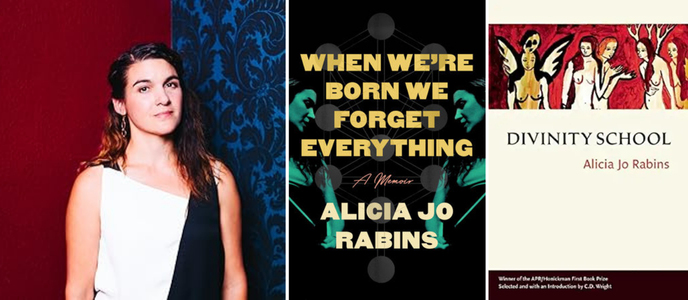
Alicia Jo Rabins is an award-winning writer, musician, performer, as well as a Torah teacher and ritualist. She's the creator of Girls In Trouble, a feminist indie-folk song cycle about biblical women, and the award-winning film, A Kaddish for Bernie Madoff. Her latest book is a memoir, When We Are Born We Forget Everything.
You can listen above or on your favorite podcast app or read the notes and links below. Here are the highlights, and the full transcript is below.
Show Notes
- Building a sustainable multi-disciplinary creative career through teaching, performance, grants, and donations
- Trusting instinct in the early generative stages of creativity and separating generation from editing
- Adapting and reimagining religious and cultural source material through music, writing, and performance
- The challenges of transitioning from poetry to long-form prose memoir, including choosing a lens for your story
- Making an independent film on a shoestring budget without waiting for Hollywood's permission
- Finding your creative voice and building confidence by leaning into vulnerability and returning to the practice of making
You can find Alicia at AliciaJo.com.
Transcript of the interview with Alicia Jo Rabins
Joanna: Alicia Jo Rabins is an award-winning writer, musician, performer, as well as a Torah teacher and ritualist. She's the creator of Girls In Trouble, a feminist indie-folk song cycle about biblical women, and the award-winning film, A Kaddish for Bernie Madoff. Her latest book is a memoir, When We Are Born We Forget Everything.
So welcome to the show, Alicia.
Alicia: Thank you so much. I'm delighted to be here.
Joanna: There is so much we could talk about. But first up—
Tell us a bit more about you and how you've woven so many strands of creativity into your life and career.
Alicia: Yes, well, I am a maximalist. What happened in terms of my early life is that I started writing on my own, just extremely young.
I'm one of those people who always loved writing, always processed the world and managed my emotions and came to understand myself through writing. So from a very young age, I felt really committed to writing.
Then I had the good fortune that my mother saw a talk show about the Suzuki method of learning violin—when you start really young and learn by ear, which is modelled after language learning. It's so much less intellectual and much more instinctual, learning by copying.
She was like, that looks like a cool thing. I was three years old at the time and she found out that there was a little local branch of our music conservatory that had a Suzuki violin programme. So when I was three and a half, getting close to four, she took me down and I started playing an extremely tiny violin.
Joanna: Oh, cute!
Alicia: Yes, and because it was part of this conservatory that was downtown, and we were just starting at the suburban branch where we lived, there was this path that I was able to follow. As I got more and more interested in violin, I could continue basically up through the conservatory level during high school.
So I had a really fantastic music education without any pressure, without any expectations or professional goals. I just kept taking these classes and one thing led to another.
I grew up being very immersed in both creative writing and music, and I think just having the gift of those two parts of my brain trained and stimulated and delighted so young really changed my brain in some ways. I'll always see the world through this creative lens, which I think I'm also just set up to do personally.
Then the last step of my multi-practice career is that in college I got very interested in Jewish spirituality. I'm Jewish, but I didn't grow up very religious. I didn't grow up in a Jewish community really. So I knew some basics, but not a ton.
In college I started to study it and also informally learned from other people I met. I ended up going on a pretty intense spiritual quest, going to Jerusalem and immersing myself after college for two years in traditional Jewish study and practice.
So that became the third strand of the braid that had already been started with music and writing. Torah study, spiritual study, and teaching became the third, and they all interweave.
The last thing I'll say is that because I work in both words and music, and naturally performance because of music, it began to branch a little bit into plays, theatre, and film, just because that's where the intersection of words, performance, and music is.
So that's really what brought me into that, as opposed to any specific desire to work in film. It all happened very organically.
Joanna: I love this. This is so cool. We are going to circle back to a lot of this, but I have to ask you—
What about work for money at any point? How did this turn into more than just hobbies and lifestyle?
Alicia: Yes, absolutely. Well, I'm very fortunate that I did not graduate college with loans because my parents were able to pay for college. That was a big privilege that I just want to name, because in the States that's often not the case. So that allowed me to need to support myself, but not also pay loans, which was a real gift.
What happened was I went straight from college to that school in Jerusalem, and there I was on loans and scholarship, so I didn't have to worry yet about supporting myself.
Then when I came back to the States, I actually found on Craigslist a job teaching remedial Hebrew. It was essentially teaching kids at a Jewish elementary school who either had learning differences or had just entered the school late and needed to be in a different Hebrew class than the other kids in their grade.
That was my first experience of really teaching, and I just absolutely fell in love with it. Although in the end, my passion is much more for teaching the text and rituals and the wrestling with the concepts, as opposed to teaching language.
So all these years, while doing performance and writing and all these things, I have been teaching Jewish studies. That has essentially supported me, I would say, between 50 and 70 per cent.
Then the rest has been paid gigs as a musician, whether as a front person leading a project or as what we call a sideman, playing in someone else's band. Sometimes doing theatre performances, sometimes teaching workshops.
That's how I've cobbled it together. I have not had a full-time job all these years and I have supported myself through both earned income and also grants and donations.
I've really tried to cultivate a little bit of a donor base, and I took some workshops early on about how to welcome donations. So I definitely try to always welcome that as well.
Joanna: That is so interesting that you took a workshop on how to welcome donations. Way back in, I think 2013, I said on this show, I just don't know if I can accept people giving to support the show. Then someone on the podcast challenged me and said, but people want to support creatives.
That's when I started Patreon in 2014. It was when The Art of Asking by Amanda Palmer came out and—
It was this realisation that people do want to support people.
So I love that you said that.
Alicia: It's not easy. It's still not easy for me, and I have to grit my teeth every time I even put in my end-of-year newsletter. I just say, just a reminder that part of what makes this possible is your generous donations, and I'm so grateful to you. It's not easy.
I think some people enjoy fundraising. I certainly don't instinctively enjoy it, but I have learned to think of it exactly the way that you're saying. I mean, I love donating to support other people's projects. Sometimes it's the highlight of my day.
If I'm having a bad day and someone asks for help, either to feed a family or to complete a creative project, I just feel like, okay, at least I can give $36 or $25 and feel like I did something positive in the last hour, even if my project is going terribly and I'm in a fight with my kid or something.
So I have to keep in mind that it is actually a privilege to give as well as a privilege to receive.
Joanna: Absolutely. So let's get back into your various creative projects. The first thing I wanted to ask you, because you do have so many different formats and forms of your creativity—how do you know when an idea that comes to you should be a song, or something you want to do as a performance, or written, or a film?
Tell us a bit about your creative process.
Because a lot of your projects are also longer-term.
Alicia: Yes. It's funny, I love planning and in some ways I'm an extreme planner. I really drive people in my family bonkers with planning, like family vacations a year in advance.
In terms of my creativity, I'm very planful towards goals, but in that early generative state, I am actually pure instinct.
I don't think I ever sit down and say, “I have this idea, which genre would it match with?” It's more like I sit on my bed and pick up my guitar, which is where I love to do songwriting, just sitting on my bed cross-legged, and I pick up my guitar and something starts coming out. Then I just work with that kernel.
So it's very nebulous at first, very innate, and I just follow that creative spirit. Often I don't even know what a project is, sometimes if it's a larger project, until a year or two in.
Once things emerge and take shape, then my planning brain and my strategy brain can jump on it and say, “Okay, we need three more songs to fill out the album, and we need to plan the fundraising and the scheduling.” Then I might take more of an outside-in approach. At the beginning it's just all instinct.
Joanna: So if you pick up your guitar, does that mean it always starts in music and then goes into writing?
Or is that you only pick up a guitar if it's going to be musical?
Alicia: I think I'm responding to what's inside me. It's almost like a need, as opposed to, “I'm going to sit down and work.”
I mean, obviously I sit down and work a lot, but I think in that early stage of anything, it's more like my fingers are itching to play something, and so I sit down and pick up my guitar. Sometimes nothing comes out and sometimes the kernel of a song comes out.
Or I'm at a café, and I often like to write when I'm feeling a little bit discombobulated, just to go into the complexity of things or use challenging emotions as fuel. I really do use it as a—I don't know if therapeutic is the word, but I think it maybe is.
I write often, as I always have, as I said before, to understand what I'm thinking. Like Joan Didion said—to process difficult emotions, to let go of stuck places.
So I think I create almost more out of a sense of just what I need in the moment. Sometimes it's just for fun. Sometimes picking up a guitar, I just have a moment so I sit down and mess around. Sometimes it's to help me struggle with something.
It doesn't always start in music. That was a random example. I might sit down to write because I have an hour and I think, I haven't written in a while. Or I do have an informal daily writing thing where I'll try to generate one loose draft of something a day, even if it's only ten pages.
I mean, sorry, ten words.
Joanna: I was going to say!
Alicia: No, no. Ten words. I'm sorry. It's often poetry, so it feels like a lot when it's ten words.
I'll just sit down with no pressure, no goal, no intention to make anything specific. Just open the floodgates and see what comes out. That's where every single project of mine has started.
Joanna: Yes, I do love that. Obviously, I'm a discovery writer and intuitive, same as you. I think very much this idea of, especially when you said you feel discombobulated, that's when you write. I almost feel like I need that.
I'm not someone who writes every day. I don't do ten lines or whatever. It's that I'll feel that sense of pressure building up into “this is going to be something.” I will really only write or journal when that spills over into—
“I now need to write and figure out what this is.”
Alicia: Yes. It's almost a form of hunger. It feels to me similar to when you eat a great meal and then you're good for a while. You're not really thinking of it, and then it builds up, like you said, and then there's a need—at least the first half of creativity. I really separate my generation and my editing.
So my generative practice is all openness, no critique, just this maybe therapeutic, maybe curious, wandering and seeing what happens. Then once I have a draft, my incisive editing mind is welcome back in, which has been shut out from that early process. So that's a really different experience.
Those early stages of creativity are almost out of need more than obligation.
Joanna: Well, just staying with that generative practice. Obviously you've mentioned your study of and practice of Jewish tradition and Jewish spirituality.
Steven Pressfield in his books has talked about his prayer to the muse, and I've got on my wall here—I don't talk about this very often, actually — I have a muse picture, a painting of what I think of as a muse spirit in some form.
So do you have any spiritual practices around your generative practice and that phase of coming up with ideas?
Alicia: I love that question, and I wish I had a beautiful, intentional answer. My answer is no.
I think I experience creativity as its own spiritual practice itself. I do love individual prayer and meditation and things like that, but for me those are more to address my specifically spiritual health and happiness and connectedness.
I'm just a dive-in kind of person. As a musician, I have friends who have elaborate backstage rituals. I have to do certain things to take care of my voice, but even that, it's mostly vocal rest as opposed to actively doing things. There's a bit of an on/off switch for me.
Joanna: That's interesting. Well, I do want to ask you about one of your projects, this collaboration with a high school on a musical performance, I Was a Desert: Songs of the Matriarchs, and also your Girls in Trouble songs about women in the Torah.
On your website, I had a look at the school, the high school, and the musical performance. It was extraordinary. I was watching you in the school there and it's just such extraordinary work. It very much inspired me—not to do it myself, but it was just so wonderful.
I do urge people to go to your website and just watch a few minutes of it.
I'm inspired by elements of religion, Christian and Jewish, but I wondered if you've come up against any issues with adaptation—respecting your heritage but also reinventing it. How has this gone for you.
Any advice for people who want to incorporate aspects of religion they love but are worried about responses?
Alicia: Well, I have to say, coming from the Jewish tradition, that is a core practice of Judaism—reinterpreting our texts and traditions, wrestling with them, arguing with them, reimagining them.
I don't know if you're familiar with Midrash, but just in case some of your listeners aren't sure I'll explain it.
There's essentially an ancient form of fanfic called Midrash, which was the ancient rabbis, and we still do it today, taking a biblical story that seems to have some kind of gap or inconsistency or question in it and writing a story to fill that gap or recast the story in an interestingly different light.
So we have this whole body of literature over thousands of years that are these alternate or added-on adventures, side quests of the biblical characters. What I'm doing from a Jewish perspective is very much in line with a traditional way of interacting with text.
I've certainly never gotten any pushback, especially as I work in progressive Jewish communities. I think if I were in an extremely fundamentalist community, there would be a lot of different issues around gender and things like that. The interpretive process, even in those communities, is part of how we show respect for the text.
When I was working with the high school—and I just want to call out the choir director, Ethan Chen, who has an incredible project where he brings in a different artist every two years to work with the choir, and they tend to have a different cultural focus each time.
He invited me specifically to integrate my songwriting about biblical women with his amazing high school choir. I was really worried at first because most of them are not Jewish—very few of them, if any. I wanted to respect their spiritual paths and their religious heritages and not impose mine on them.
So I spent a lot of time at the beginning saying, this project has religious source material, but essentially it is a creative reinterpretive project. I am not coming to you to bring the religious material to you.
I'm coming to take the shared Hebrew Bible myths and then reinterpret those myths through a lens of how they might reflect our own personal struggles, because that's always my approach to these ancient stories. I wanted to really make that clear to the students. It was such a joy to work with them.
Joanna: It's such an interesting project. Also, I find with musicians in general this idea of performance. You've written this thing—or this thing specifically with the school—and it doesn't exist again, right? You're not selling CDs of that, I presume. Whereas compared to a book, when we write a book, we can sell it forever.
It doesn't exist as a performance generally for an author of a memoir or a novel. It carries on existing.
So how does that feel, the performance idea versus the longer-lasting thing?
I mean, I guess the video's there, but the performance itself happened.
Alicia: I do know what you mean. Absolutely. We did, for that reason, record it professionally. We had the sound person record it and mix it, so it is available to stream. I'm not selling CDs, but it's out there on all the streaming services, if people want to listen. I do also have the scores, so if a choir wanted to sing it.
The main point that you're making is so true. I think there's actually something very sacred about live performance—that we're all in the moment together and then the moment is over.
I love the artefacts of the writing life. I love writing books. I love buying and reading books and having them around, and there's piles of them everywhere in this room I'm standing in.
I feel like being on stage, or even teaching, is a very spiritual practice for me, because it's in some ways the most in-the-moment I ever am. The only thing that matters is what's happening right then in that room.
It's fleeting as it goes. I'm working with the energy in the room while we're there. It's different every time because I'm different, the atmosphere is different, the people are different. There's no way to plan it. The kind of micro precision that we all try to bring to our editing—you can't do that.
You can practice all you want and you should, but in the moment, who knows? A string breaks or there's loud sound coming from the other room. It is just one of those things.
I love being reminded over and over again of the truth that we really don't control what happens. The best that we can do is ride it, surf it, be in it, appreciate it, and then let it go.
Joanna: I think maybe I get a glimpse of that when I speak professionally, but I'm far more in control in that situation than I guess you were with—I don't know how many—was it a hundred kids in that choir? It looked pretty big.
Alicia: It was amazing. It was 130 kids. Yes.
Joanna: 130 kids! I mean, it was magic listening to it. And yes, of course, showing my age there with buying a CD, aren't I?
Alicia: Well, I do still sell some CDs of Girls in Trouble on tour, because I have a bunch of them and people still buy them. I'm always so grateful because it was an easier life for touring musicians when we could just bring CDs. Now we have to be very creative about our merch.
Joanna: Yes, that's a good point because people are like, “Oh yes, I'll scan your QR code and stream it,” but you might not get the money for that for ages, and it might just be five cents or whatever.
Alicia: Streaming is terrible for live musicians. I mean, I don't know if you know the site Bandcamp, but it's essentially self-publishing for musicians.
Bandcamp is a great way around that, and a lot of independent musicians use it because that's a place you can upload your music and people can pay $8 for an album. They can stream it on there if they want, or they can download it and have it. But, yes, it's hard out there for touring musicians.
Joanna: Yes, for sure. Well, let's come to the book then. Your memoir, When We Are Born We Forget Everything.
Tell us about some of the challenges of a book as opposed to these other types of performances.
Alicia: Well, I come out of poetry, so that was my first love. That's what I majored in in college. That's what my MFA is in.
Poetry is famously short, and I'm not one of those long-form poets. I have been trained for many years to think in terms of a one-page arc, if at all. Arc isn't even really a word that we use in poetry.
So to write a full-length prose book was really an incredible education. Writing it basically took ten years from writing to publication, so probably seven years of writing and editing. I felt like there was an MFA-equivalent process in the number of classes I took, books I read, and work that went into it.
So that was one of my main joys and challenges, really learning on the job to write long-form prose coming out of poetry.
How to keep the engine going, how to think about ending one chapter in a way that leaves you with some torque or momentum so that you want to go into the next chapter. How many characters is too many? Who gets names and who doesn't?
Some of these things that are probably pretty basic for fiction writers were all very new to me. That was a big part of my process.
Then, of course, poets don't usually have agents. So once it was done, I began to query agents. It was the normal sort of 39 rejections and then one agent who really understood what I was trying to do. She's incredible, and she was able to sell the book.
The longevity of just working on something for that long—I have a lot of joy in that longevity—but it does sometimes feel like, is this ever going to happen, or am I on a fool's errand?
Joanna: I guess, again, the difference with performance is you have a date for the performance and it's done then. I suppose once you get a contract, then for sure it has to be done. But memoir in particular, you do have to set boundaries, because of course your life continues, doesn't it?
So what were the challenges in curating what went into the book?
Because many people listening know memoir is very challenging in terms of how personal it can be.
Alicia: Yes, and one thing I think is so fascinating about memoir is choosing which lens to put on your story, on your own story.
I heard early on that the difference between autobiography and memoir is that autobiography tries to give a really comprehensive view of a life, and memoir is choosing one lens and telling the story of a life through that lens, which is such a beautiful creative concept.
I knew early on that I wanted this to be primarily a spiritual memoir, and also somewhat of an artistic memoir, because my creativity and my spirituality are so intertwined.
It started off being spiritual, and also about my musical life, and also about my writing life. In the end, I edited out the part about my writing life, because writing about writing was just too navel-gazing.
So there's nothing in there about me coming of age as a writer, which used to be in there, but that whole thing got taken out. Now it's spiritual and musical.
For me, it really helped to start with those focuses, because I knew there may be things that were hugely important in my life, absolutely foundational, that were not really going to be either mentioned or gone deeply into in the book.
For example, my husband teases me a lot about how few pages and words he gets. He's very important in my life, but I actually met him when I was 29, and this book really mainly takes place in the years leading up to that.
There's a little bit of winding down in the first few years of my thirties, but this is not a book about my life with him. He is mentioned in it. That story is in there.
Having those kinds of limitations around the canvas—there's a quote, I forget if it was Miranda July, but somebody said something like, basically when you put a limitation on your project, that's when it starts to be a work of art.
Whatever it is, if you say, “I'm taking this canvas and I'm using these colours,” that's when it really begins, that initial limitation. That was very helpful.
Joanna: It's also the beauty of memoir, because of course you can write different memoirs at different times. You can write something about your writing life. You can write something else about your marriage and your family later on. That doesn't all have to be in one book.
I think that's actually something I found interesting. And I would also say in my memoir, Pilgrimage, my husband is barely mentioned either.
Alicia: Does he tease you too?
Joanna: No, I think he's grateful. He is grateful for the privacy.
Alicia: That's why I keep saying, you should be grateful!
Joanna: Yes. You really should. Like, maybe stop talking now.
Alicia: Yes, exactly. I know. Marriage, memoir—those words should strike fear into his heart.
Joanna: They definitely should. But let's just come back. When I look at your career—
You just seem such an independent creative, and so I wondered why you decided to work with a traditional publisher instead of being an independent.
How are you finding it as someone who's not in charge of everything?
Alicia: It's a great question. The origin story for this memoir is that I was actually reading poetry at a writing conference called Bread Loaf in the States. This was 16 years ago or something.
I was giving a poetry reading and afterwards an agent, not my agent, came up to me and said, you know, you have a voice. You should try writing nonfiction because you could probably sell it.
Back to your question about how I support myself, I am always really hustling to make a living. It's not like I have some separate well-paying job and the writing has no pressure on it. So my ears kind of perked up.
I thought, wait, getting paid for writing? Because poetry is literally not in the world. It's just not a concept for poets. That's not why we write and it's not a possibility.
So a little light turned on in my brain. I thought, wow, that could be a really interesting element to add to my income stream, and it would be flexible and it would be meaningful.
For a few years I thought, what nonfiction could I write? And I came up with the idea of writing a book about biblical women from a more scholarly perspective, because I teach that material and I've studied it.
I went to speak to another agent and she said, well, you could do that, but if you actually want to sell a book, it's going to have to be more of a trade book. So if you don't want an academic press, which wouldn't pay very much, you would have to have some kind of memoir-like stories in there to just sweeten it so it doesn't feel academic.
So then I began writing a little bit of spiritual memoir. I thought, okay, well, I'll write about a few moments. Then once I started writing, I couldn't stop. The floodgates really opened. That's how it ended up being a spiritual memoir with interwoven stories of biblical women. It became a hybrid in that sense.
I knew from the beginning that this project—for all my saying earlier that I never plan anything and only work on instinct, I was thinking as I said that, that cannot be true.
This time, I actually thought, what if, instead of coming from this pure, heart-focused place of poetry, I began writing with the intention of potentially selling a book? The way my fiction writer friends talked about selling their books.
So that was always in my mind. I knew I would continue writing poetry, continue publishing with small presses, continue putting my own music out there independently, but this was a bit of an experiment. What if I try to interface with the publishing world, in part for financial sustainability?
And because I had a full draft before I queried, I never felt like anyone was telling me what to write. I can't imagine personally selling a book on proposal, because I do need that full capacity to just swerve, change directions, be responsive to what the project is teaching me.
I can't imagine promising that I'll write something, because I never know what I'll write. But writing at least a very solid draft first, I'm always delighted to get notes and make polish and rewrite and make things better. I took care of that freedom in the first seven years of writing and then I interfaced with the agent and publisher.
Joanna: I was going to say, given that it's taken you seven to ten years to do this and I can't imagine that you're suddenly a multimillionaire from this book. It probably hasn't fulfilled the hourly rate that perhaps you were thinking of in terms of being paid for your work.
I think some people think that everyone's going to end up with the massive book deal that pays for the rest of their life.
I guess this book does just fit into the rest of your portfolio career.
Alicia: Yes. One of the benefits of these long arcs that I like to work on is, one of them—and probably the primary one—is that the project gets to unfold on its own time. I don't think I could have rushed it if I wanted. The other is that it never really stopped me from doing any of my other work.
Joanna: Mm-hmm.
Alicia: So it's not like, oh, I gave up months of my life and all I got was this advance or something. It's like, I was living my life and then when I had a little bit of writing time—and I will say, it impacted my poetry. I haven't written as much poetry because I was working on this.
So it wasn't like I just added it on top of everything I was already doing, but it was a pleasure to just switch to prose for a while. It was just woven into my life.
I appreciated having this side project where no one was waiting for it. There were no deadlines, there was no stress around it, because I always have performances to promote and due dates for all kinds of work. It was just this really lovely arena of slow growth and play.
When I wanted a reader, I could do a swap with a writer friend, but no one was ever waiting for it on deadline. So there's actually a lot of pleasure in that.
Then I will say, I think I've made more from selling this than my poetry. Probably close to ten times more than I've ever made from any of my poetry.
So on a poetry scale, it's certainly not going to pay for my life, but it actually does make a true financial difference in a way that much of my other work is a little more bit by bit by bit. It's actually a different scale.
Joanna: Well, that's really good. I'm glad to hear that. I also want to ask you, because you've done so many things, and—
I'm fascinated by your independent film, A Kaddish for Bernie Madoff.
I have only watched the trailer. You are in it, you wrote it, directed it, and it's also obviously got other people in, and it's fascinating. It's about this particular point in history.
I've written quite a lot of screenplay adaptations of my novels, and I've had some various amounts of interest, but the whole film industry to me is just a complete nightmare, far bigger nightmare than the book industry. So I wonder if you could maybe talk about this, because it just seems like you made a film, which is so cool.
Alicia: Oh yes, thank you.
Joanna: And it won awards, yes, we should say.
Alicia: Did we win awards? Yes. It really, for an extremely low-budget indie film, went far further than my team and I could ever have imagined.
I will say I never intended to make a film. Like most of the best things in my life, it really happened by accident.
When I was living in New York— I lived there for many years—the 2008 financial collapse happened and I happened to have an arts grant that gave a bunch of artists workspace, studio space, in essentially an abandoned building in the financial district.
It was an empty floor of a building. The floor had been left by the previous tenant, and there's a nonprofit that takes unused real estate in the financial district and lets artists work in it for a while.
So I was on Wall Street, which was very rare for me, but for this year I was working on Wall Street. Even though I was working on poems, the financial collapse happened around me, and I did get inspired by that to create a one-woman show, which was more of a theatre show.
That was already a huge leap for me because I had no real theatre experience, but it was experimental and growing out of my poetry practice and my music. It was a musical one-woman show about the financial collapse from a spiritual perspective, apparently.
So I performed that. I documented it, and then a friend who lives in Portland, Oregon, where I now live, said, “I'm a theatre producer, I'd like to produce it here.” So then I rewrote it and did a run here in Portland of that show.
Essentially, I started to tour it a little bit, but I got tired of it. It was too much work and it never really paid very much, and I thought, this is impacting my life negatively. I just want to do a really good documentation of the show.
So I wanted to hire a theatre documentarian to just document the show so that it didn't disappear, like you were saying before about live performance. But one of the people I talked to actually ended up being an artistic filmmaker, as opposed to a documentarian.
She watched the archival footage, just a single camera of the show, and said, “I don't think you should do this again and film it with three cameras. I think you should make it into a feature film. And in fact, I think maybe I should direct it, because there's all this music in it and I also direct music videos.” We had this kind of mind meld.
Joanna: Mm.
Alicia: I never intended to make a film, but she is a visionary director and I had this piece of IP essentially, and all the music and the writing.
We adapted it together. We did it here in Portland. We did all the fundraising ourselves. We did not interface with Hollywood really. I think that would be, I just can't imagine.
I love Hollywood, but I'm not really connected, and I can't imagine waiting for someone to give us permission or a green light to make this. It was experimental and indie, so we just really did it on the cheap.
We had an amazing producer who helped us figure out how to do it with the budget that we had. We worked really hard fundraising, crowdfunding, asking for donations, having parties to raise money, and then we just did it and put it out there.
I think my main advice—and I hear this a lot on screenwriting podcasts—is just make the thing.
Make something, as opposed to trying to get permission to make something.
Because unless you're already in that system, it's going to be really hard to get permission to make it.
Once you make something, that leads to something else, which leads to something else. So even if it's a very short thing, or even if it's filmed on your phone, just actually make the thing. That turned out to be the right thing for us.
Joanna: Yes, I mean, I feel like that is what underpins us as independent creatives in general. As an independent author, I feel the same way. I'm never asking permission to put a book in the world. No, thank you.
Alicia: Exactly. We have a vision and we do it. It's harder in some ways, but that liberation of being able to really fully create our vision without having to compromise it or wait for permission, I think it's such a beautiful thing.
Joanna: Well, we're almost out of time, but I do want to ask you about creative confidence.
Alicia: Hmm.
Joanna: I feel I'm getting a lot of sense about this at the moment, with all the AI stuff that's happening. When you've been creating a long time, like you and I have, we know our voice and we can lean into our voice. We are creatively confident. We'll fail a lot, but we'll just push on and try things and see what happens.
Newer creators are struggling with this kind of confidence. How do I know what is my voice? How do I know what I like? How do I lean into this?
So give us some thoughts about how to find your voice and how to find that creative confidence if you don't feel you have it.
Alicia: I love that. One thing I will say is that I always think whatever is arising is powerful material to create from. So if a lack of confidence is arising, that's a really powerful feeling to directly explore and not just try to ignore.
Although sometimes one has to just ignore those feelings. But to actually explore that feeling, because AI can't have that, right? AI can't really feel a crisis of confidence, and humans can.
So that's a gift that we have, those kinds of sensitivities. I think to go really deep into whatever is arising, including the sense that we don't have the right to be creating, or we're not good enough, or whatever it is.
Then I always do come back to a quote. I think it might have been John Berryman, but I'm forgetting which poet said it. A younger poet said, “How will I ever know if I'm any good?” And this famous poet said something like—I'm paraphrasing—”You'll never know if you're any good. If you have to know, don't write.”
That has been really liberating to me, actually. It sounds a little harsh, but it's been really liberating to just let go of a sense of “good enough.” There is no good enough. The great writers never know if they're good enough.
Coming back to this idea of just making without permission—the practice of doing the thing is being a writer. Caring and trying to improve our craft, that's the best that we can have.
There's never going to be a moment where we're like, yes, I've nailed this. I am truly a hundred per cent a writer and I have found my voice. Everything's always changing anyway.
I would say, either go into those feelings or let those feelings be there. Give them a little tea. Tell them, okay, you're welcome to be here, but you don't get to drive the boat. And then return to the practice of making.
Joanna: Absolutely. Great.
So where can people find you and your books and everything you do online?
Alicia: Everything is on my website, which is AliciaJo.com, and also on Instagram at @ohaliciajo. I'd love to say hello to anyone who's interested in similar topics.
Joanna: Brilliant. Well, thanks so much for your time, Alicia. That was great.
Alicia: Thank you. I love your podcast. I'm so grateful for all that you've given the writing world, Jo.
Leave a Reply