OLD POST ALERT! This is an older post and although you might find some useful tips, any technical or publishing information is likely to be out of date. Please click on Start Here on the menu bar above to find links to my most useful articles, videos and podcast. Thanks and happy writing! – Joanna Penn
I’ve spent the last few days in Denver, Colorado at Digital Commerce Summit (DCS) where I spoke on Intellectual Property Assets, or Making Money with Books. (Yes, I will be posting a version of the talk online in the coming weeks. And yes, it was freezing when I arrived, hence the hoodie!)
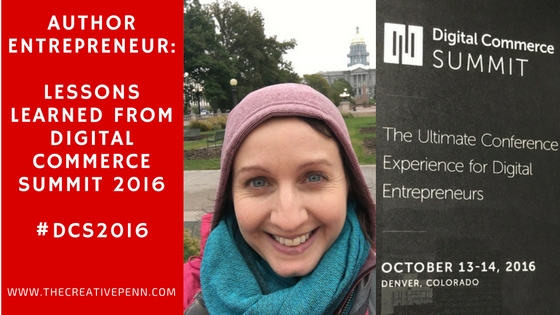 The conference was a big deal for me because back in 2008, before I knew anything about internet marketing, I discovered copyblogger.com, the team behind DCS.
I learned about the importance of creating content that would attract the right people, how SEO and headline writing could make a huge difference to traffic, and why owning my own website and email list was critical for a long term business.
My bedrock of ethical, authentic marketing, and the principle of know, like, trust came from what I learned from Brian Clark, Sonia Simone and the Copyblogger team. I’ve been part of their audience for eight years, so it meant a lot to speak to that audience from the stage.
It was also great to take a step away from the author world and be amongst people working in all kinds of different niches. It turns out that the challenges of discoverability and marketing are the same in any industry! I have 30 pages of notes from the event, but here are the aspects that resonated most deeply with me.
(1) Change and transition are inevitable. Actively choose your path through … or be left behind.
Brian Clark started Copyblogger in 2006 as a one-man blog. In the last ten years, it has grown into Rainmaker Digital with software and services as well as training. It’s a 65+ person distributed company that made over $12 million last year, even though, essentially, it’s still a business powered by a blog.
This is what can happen when you make choices to grow and expand a business over time. But more importantly for us as authors, it’s about what can happen if you provide amazing content for your niche audience consistently over years. That's true for books, for blogging and for podcasting or videos.
In the eight years I’ve been an author running my business online, I’ve seen so many people drop away, unhappy with the slow pace of growth. But much of my own success comes purely from consistently providing value over the long term, and I learned this from Brian and his team.
Of course, you can’t be complacent and expect things to remain the way they used to be.
You have to adapt and change it up. Back in 2006, there were few blogs and social media was about getting on the front page of Digg. There was no mobile market, no smart phones, no Facebook or Twitter, Instagram or Snapchat. Now, it’s a crowded market with many more distractions. If Copyblogger had remained the same, trying to hold onto what worked back in 2006, it would likely be dead by now.
In the same way, any author holding onto the old model of traditional publishing will likely be disappointed. Any indie expecting to be a Kindle millionaire overnight will feel the same. Any publisher attempting to market in the old way will likely be unsuccessful. Times have changed and you’ve got to keep updating your skills and the way you run your business.
“It is not the strongest or the most intelligent who will survive but those who can best manage change.” Charles Darwin
One example of this willingness to change stood out for me. Copyblogger shut down their Facebook page a few years back, but then a little later, re-joined the platform. As Brian Clark said, “We left a social network that didn’t work for us and joined an advertising platform that does.”
Facebook fundamentally changed the way it worked, and we have all had to change with it. The same applies for Amazon KDP and for the new tools we get as authors. They inevitably change the rules and we either adapt, or we will fall by the wayside.
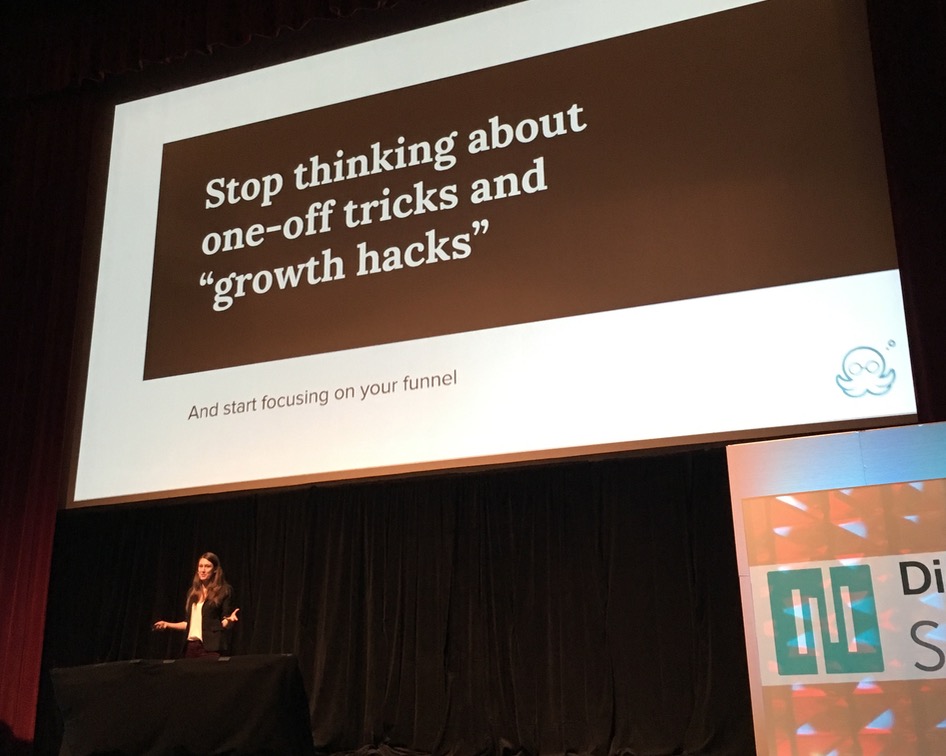
But some things stay the same.
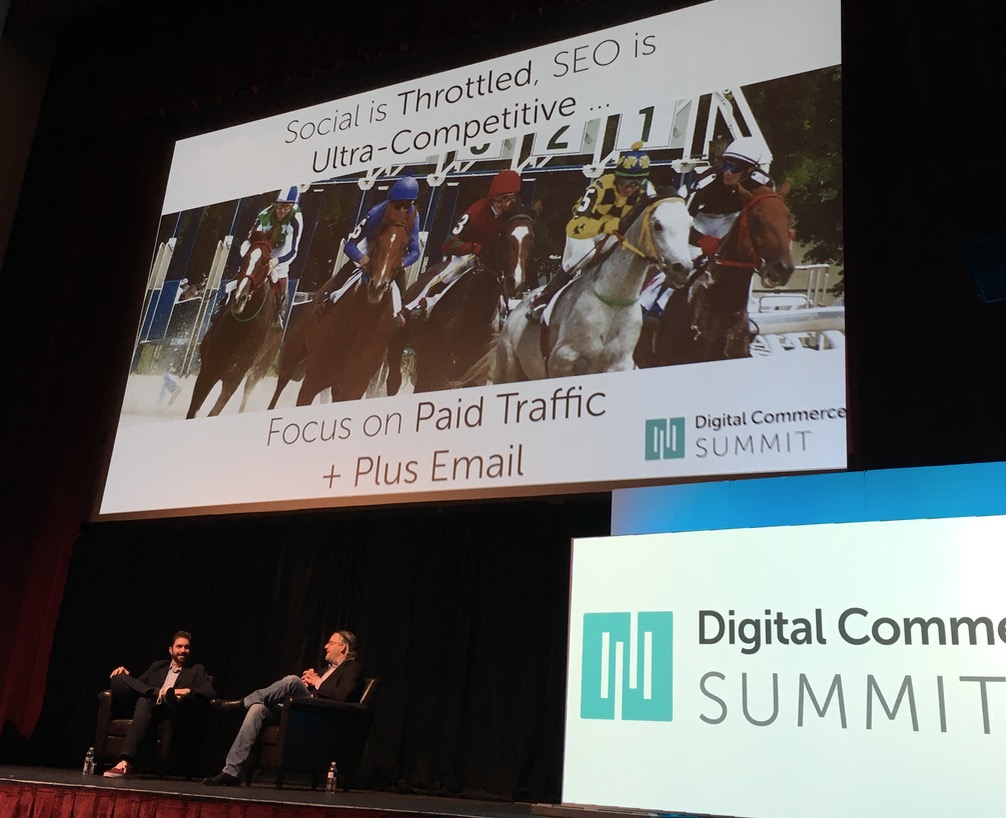
Owning your own website and email list are critical so you are not dependent on the ever-changing platforms. Email remains the best way to sell. Personal relationships will always be important.
These fundamental principles are still the same in the author world. Because if you build everything on Amazon and they change the rules, you’re done. If you rely only on Facebook for your traffic and connection to your readers, and they change the rules, you’re done.
“Pivot before it’s broken.”
Kevan Lee from Buffer talked about this and I think it’s especially important for the indie market right now.
If you feel yourself burning out from an aggressive production schedule, change it up. Keep an eye on what’s changing in the industry in terms of publishing and marketing. Adjust what you’re doing before your current model becomes obsolete.
(2) Is the juice worth the squeeze?
Rand Fishkin from Moz spoke in his keynote about the things he would change about the way his business unfolded. The importance of living, rather than focusing just on work.
He challenged us to make a list. What would you change? What would you keep the same? Because what’s the point in the money if you’re not enjoying your life?
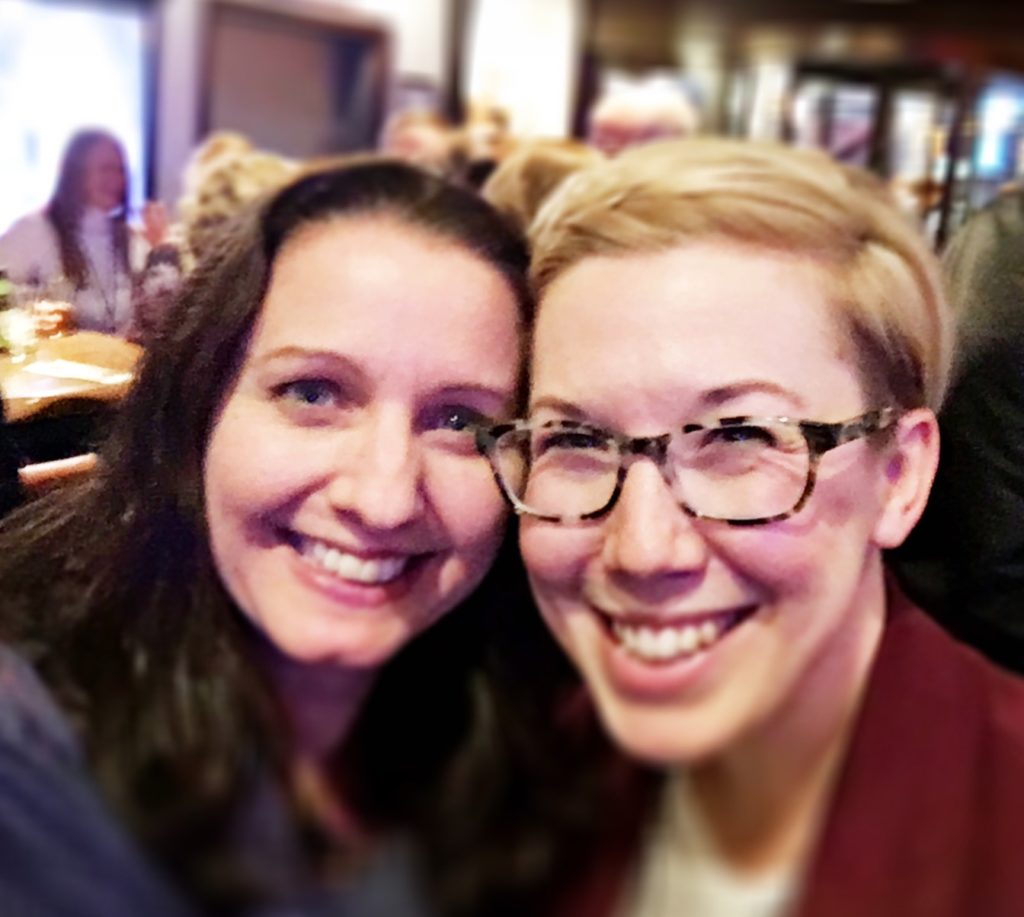
The exercise made me reflect on the change I’ve made, because I still have the list I made back in 2008. I wanted freedom, to be location independent, to build a body of work I was proud of and to spend more time traveling for fun with my husband. In 2016, I have the life I designed back then, and now I’m considering the next step.
Laura Roeder spoke about how she transitioned out of LKR, a training business where she was central to the brand, into MeetEdgar.com (which I use for social scheduling, and is a fantastic service).
LKR was a seven-figure business but it wasn’t the life that Laura wanted to lead. It couldn’t scale beyond her personal effort and she had become the bottleneck to the business. So she and her husband started a software company and over several years, they transitioned their income. Once the new business was earning enough, she shut down LKR. She shut down a seven-figure business to try something new, because she wanted a different kind of life.
There are authors who complain that being an indie is too hard, or how much their publisher let them down, or how Amazon treats them badly, or how they can’t get discovered, or how much they don’t want to learn marketing. I would challenge those authors to consider what they really want to do with their lives. Is the juice worth the squeeze for you?
Because this is the life of an author now.
I don’t know if the myth of “just writing” ever existed, but it certainly doesn’t now. If you want to be a successful author in the years to come, you have to up-skill. Writing may fundamentally be the same, but publishing and marketing continue to change. Only you can decide how you want your life to be.
What transition do you want to make? Where are you right now? Where do you want to get to?
(3) Find your tribe. Don’t try to fit in somewhere that doesn’t bring you alive.
Bear with me here. This is a personal story but it might just resonate with some of you 🙂
 There are some informal rules about professional speaking, especially if you’re speaking on a stage in a theater to several hundred people.
Especially if you’ve flown from another continent.
And especially if you’re a woman.
If men want to look smart for a speech, they wear a suit and it’s all good. For female speakers, there is a gauntlet to run in terms of what to wear. Smart dress with heels? Trouser suit? Jeans with boots and a jacket? How much makeup?
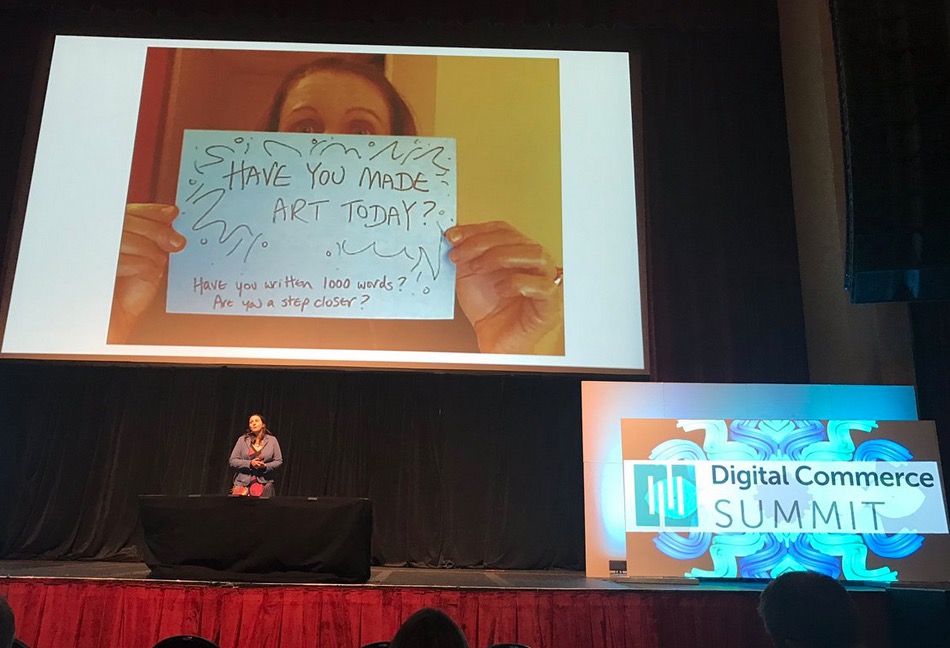
This may seem trivial, but if you’ve read my book, Public Speaking for Authors, Creatives and Other Introverts, you’ll know that I suffer from anxiety before speaking (like most normal people!). What to wear is just one aspect but it’s important for confidence, and this talk in Denver was the largest venue I’ve ever spoken in, on the largest stage, amongst people I desperately admire.
I wanted everything to be perfect.
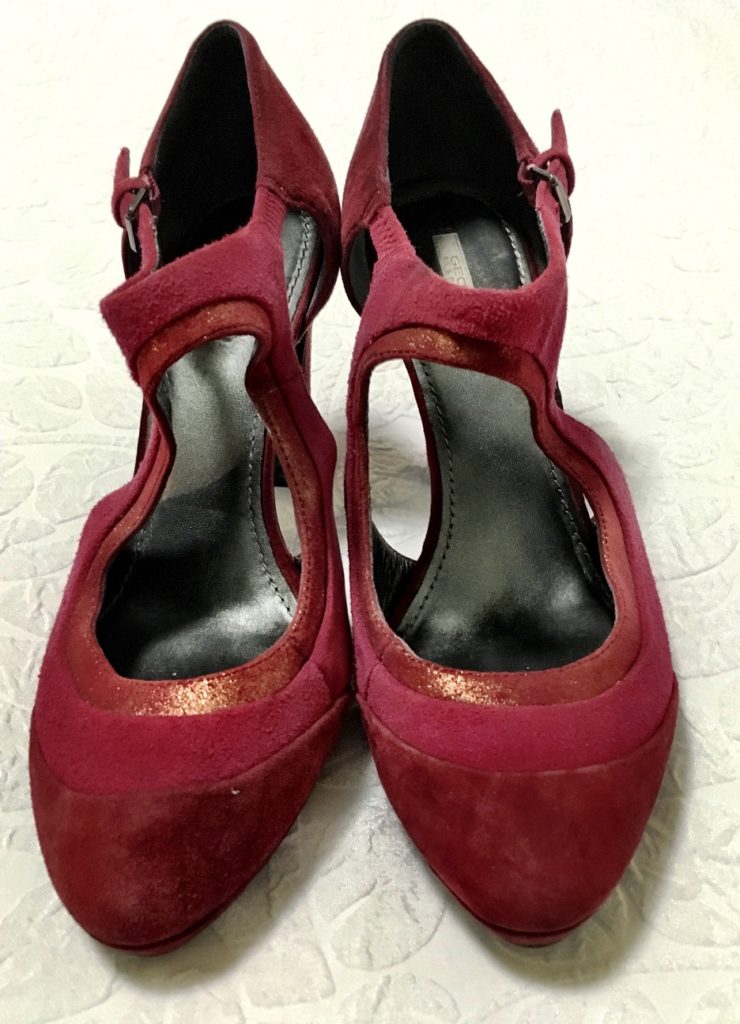
So I went with a colorful Desigual dress, blue jacket and red heels. But I don’t wear heels much and I was sitting there, waiting for my turn, stressing about whether I might trip up and fall over on stage, let alone whether I might get my words out.
Then I stopped for a moment and really considered the Tribe around me.
Fans of Copyblogger, of Brian Clark, Sonia Simone, Chris Garrett and the rest of the lovely Rainmaker Digital team. Mostly introverts who work from home on computers, making their living on the internet. People who value knowledge and what works for an entrepreneur.
They didn’t care at all about my shoes.
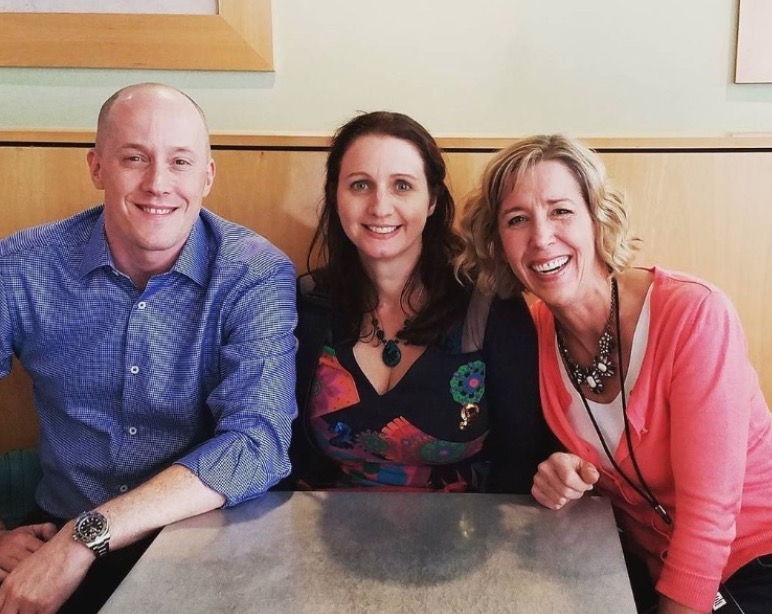
Again, this may seem trivial, but I’ve spoken at a lot of conferences where I would be judged on what I wore. But as I looked at the amazing group of female speakers in particular: Tara Gentile, Sonia Simone (who has pink hair), Pamela Wilson, Joanna Wiebe, Andrea Vahl, and Laura Roeder, I realised that I was with people who ‘got' me.
Whatever I wore.
So I took off my heels and wore flats to speak. (It went well!) I’m happy to say I left those heels in the hotel room in Denver, because I don’t want to ever wear them again. I don’t want to feel off balance and in pain for the sake of appearance. I only want to spend my time with people who appreciate that I like wearing flowery Doctor Martin boots 🙂
“Don’t be more average. Be more individual.” Joanna Wiebe, Copyhackers.
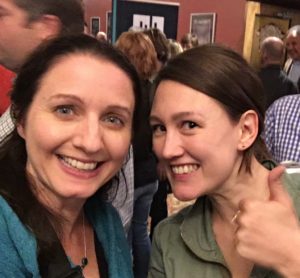
This is a tiny example of what I felt over the two days of the Digital Commerce Summit. I was at home amongst a group of entrepreneurs who value generosity, authenticity and excellence.
I was energised by people who are fiercely independent and ambitious, but also want to help others and serve their audience. People who value their reputation and won’t tarnish that for the sake of a quick buck.
Sonia Simone talked about the mindset of the successful entrepreneur. She said, “Don’t try to get support for your business from normal people, they won’t understand.” This is also true for authors!
We need events like this to nurture us, because we often don't get what we need from our families and non-author friends.
I learned how to run an online business from the Copyblogger team, and I’m so grateful to be able to speak at the event and to be part of that Tribe. It made me determined to seek out occasions to be in person with similar minded creative entrepreneurs more often.
In-person events take me out of my comfort zone but I need them.
I made connections with people I’ve only tweeted with before and opportunities will arise from those relationships. I met a whole load of people who support my podcast and who have been reading my blog for years (thank you all!) And I got a serious buzz out of being with my Tribe!
Interested in Digital Commerce?
 To find out more, check out copyblogger.com for resources on content marketing, Digital Commerce Institute for learning how to run a business online, StudioPress for WordPress themes and Rainmaker Platform for hosted website solutions.
If you like audio, check out rainmaker.fm. I listen to Brian’s podcast, Unemployable, to stay current with digital commerce and internet marketing trends because I trust that his team will continue to ride the change and grow into the future.
I want the same for my business. What do you want for yours?
I'd love to hear your thoughts, so please leave a comment below.