OLD POST ALERT! This is an older post and although you might find some useful tips, any technical or publishing information is likely to be out of date. Please click on Start Here on the menu bar above to find links to my most useful articles, videos and podcast. Thanks and happy writing! – Joanna Penn
I just did a fantastic event in Auckland, New Zealand, so a big thanks to everyone who came! Plus a big thanks to BookTrack who sponsored and organized the event, as well as Auckland Libraries who hosted it.
So what is Booktrack?
First up, watch this quick video to get the idea about what it is – watch below or here on YouTube
http://youtu.be/59ixz6udGzQ
In order to learn more about this, I interviewed Paul Cameron, CEO and co-founder of Booktrack about the service. In this video, we talk about why he and his brother started the company and what they want to achieve, as well as the benefits for authors and readers. You can watch below or here on YouTube.
Highlights of our discussion include:
- People often read in public accompanied by a soundtrack of some kind – either to shut out ambient noise, or to accompany the story.
Books are (currently) one of the only entertainment choices that doesn't have synchronized sound.
- Authors often choose soundtracks as they write, and share it with readers. For example, check out the Undercover Soundtrack on Roz Morris' blog
- Booktrack takes a movie style soundtrack and synchronizes it with individual reading speed via apps. You can create these yourself for free – and it's super fun!
- Booktrack has a LOT of music and sound available to use – you can't just use any music because of copyright
 They also have an education side, Booktrack Classroom, where schools are using books to help children engage with texts. Studies show that people retain far more when they read with a soundtrack. It's also fun to create, and music means a lot for certain age groups.
- I mention how soundtracks on film are designed to underscore emotional elements, and no film is complete now without a soundtrack. Booktrack is aiming to get to this point in the future.
- Readers can find Booktrack on the app stores or online Booktrack.com – it's free to use and try at the moment.
- The company's aim is to become something similar to Audible but without words – selling books with soundtracks direct to consumers.
 Marketing and sales with BookTrack
Book marketing is a constant challenge for us all and one way to stand out is by having more than just text available. If you can add sound to your words, it brings another atmospheric dimension to the reading experience, and may be enough to draw people into your book.
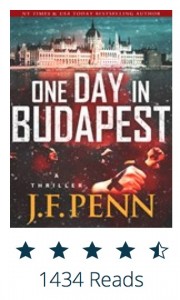
The easiest thing to do is to check out a few books. Here's my prologue for One Day In Budapest, and Hugh Howey's Sand
You can easily share the Booktracks on social media and email, and you can also use embeddable widgets on your website.
In terms of monetization, you can add a link to all the platforms where people can buy your book as part of the free aspect of the platform. In 2015, Booktracks will be available for sale, so could provide another revenue stream.
Five useful tips for using Booktrack
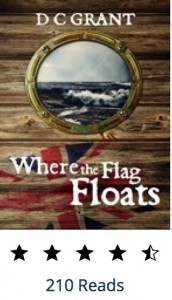
I asked author D.C.Grant to share her tips for using the service. You can check out her book, Where the flag floats, here on Booktrack.
Dawn also has a book for authors, The Booktrack Author User Guide, which will help you if you want to do DIY.
 When you are creating a sound track for your book using Booktrack, it is called booktracking.
- Treat booktracking time like writing time – block off a period of time with no distractions, switch off email/ text message/social media notifications. Also limit or exclude other sounds, or work using a headset so that you can concentrate on the tracks.
- Booktrack short sections at a time. Don’t attempt to do too much all at once.
- Keep pen and paper handy, or a note-taking app like OneNote, to make a note of the tracks that appeal to you as you go through the results of your search criteria. It’ll be a certainty that you won’t remember the track that you liked on page 2 by the time you get to page 6.
- If you find the diversity of music tracks overwhelming, search for a composer whose music suits the genre/theme of your book and make that your ‘go-to’ composer when choosing tracks. For a showcase of composers and the type of music they produce, use the Booktrack Music Showcase.
- Layer your sound – start with music, then layer on an ambience track and finish with sound effects. Or layer two ambience tracks and then sound effects. Or a music track and two ambience tracks and no sound effects. The choice is up to you. You can layer on as many tracks as you like, but too many and things may get muddled! Play it back to make sure it’s not too much and that the sound effects don’t get overwhelmed.
Booktracking can appear daunting but there’s no better way to learn that to just jump in and do it! Have a go today.
BIO: D C Grant writes books for boys because she reads books for boys. Her favorite authors are Lee Child and Bernard Cornwall and with these influences she was never going to be a romance writer. D C Grant currently lives in Auckland, New Zealand but was born in Manchester, England and lived for twenty years in Durban, South Africa. She currently lives in a New York style loft apartment with a slightly psychotic cat called Candy.
Here's how to make a Booktrack
https://www.youtube.com/watch?v=cYSpcOd-j40
You can find out more at Booktrack.com or on twitter @booktrack
What do you think about this? Do you ever listen to music/movie soundtracks when reading? Have you tried using Booktrack as a reader or as an author and do you have any tips or thoughts? Please leave your comments below and join the conversation.