OLD POST ALERT! This is an older post and although you might find some useful tips, any technical or publishing information is likely to be out of date. Please click on Start Here on the menu bar above to find links to my most useful articles, videos and podcast. Thanks and happy writing! – Joanna Penn
 This is a guest post from Doug Lance, the Editor-in-Chief and Founder of eFiction Magazine. Doug and I connected originally on Twitter and I think he really helps authors with his great magazine.
Some of the greatest, most prolific authors of all time have found their start in one auspicious and often overlooked way – literary magazines. For those unfamiliar, a literary magazine is a collection of short stories, poetry, and editorials published to a subscriber base much like Sports Illustrated or Cosmopolitan.
Literary magazines are generally put out two to four times a year. There are hundreds of such magazines all around the world. When you hear about short stories winning awards, nine times out of ten they were published in a literary magazine. Despite, or perhaps in spite of, the indie revolution in publishing, literary magazines are still going strong. If you’ve been struggling to find an agent or publisher for your book or if you’re new to writing and you want to break into the publishing scene, then fiction magazines are one of the best ways to gain recognition and publishing credits in your bio. I'm here to teach you how to get started publishing in literary magazines.
How to get published in a literary magazine:
Step 1 – Find a target magazine
CLMP is the industry standard directory for literary magazines. If you’re committed to publishing your work in a literary magazine, you must pick up the latest edition of the CLMP directory. It is a handy resource for discovering literary magazines that fit your style. Duotrope is a digital way to find a target magazine. This site is wonderful. They have any and all the information you could ever want on thousands of magazines. Best part is, it’s searchable. Duotrope can save you a lot of time, but browsing the CLMP is nice, too. They’re both great resources and can be used in tandem. Look for a magazine that fits your genre most importantly, but also your style.
Step 2 – Read your target magazine
Magazine editors have exacting tastes in fiction. Due to the huge number of submissions they receive, they may give a story a few pages, paragraph, or sometimes even just a few sentences to impress them. That’s why it is crucial for you to read your target magazines. Read them cover to cover. Order back issues and read those, too. Not only will you enjoy beautiful writing and great stories, you’ll get a chance to see if your work fits in with this magazine and maybe learn some ways to improve your prose at the same time.
The process of publishing short stories is a stepping stone to publishing longer works. It is one that many prospective authors forego. They then wonder why their books aren’t getting picked up by agents. The rejection by agents frustrates many previously unpublished authors and they either quit writing or self-publish to no sales. Madness soon follows. Don’t be a crazy. Study your target magazine and write to please the editors.
Step 3 – Write your story
You’d better know how to do this step!
Make sure to check out the magazine’s guidelines before starting your story. Their rules may impact how you approach writing your story.
Step 4 – Send the story out into the world
This may be the most tense part of the whole process or it may not be, everyone views rejection differently. Some people get nervous about some stranger will be judging their baby–their story. Others don’t sweat it. They let criticism roll off like water on a turtle’s shell. Either way, depending on the magazine you are submitting to, you can expect one to six months before a response.
Some magazines will give you a detailed response as to why they did or didn’t accept your work, others won’t. Some magazines will not even respond. For that reason, some writers send one story or poem to many different journals. If you chose to send multiple submissions, do make sure to let the editors know. Nothing is more bothersome to an editor than a late retraction.
If your story is accepted, you will be paid for first print rights (usually between $0.01 – $0.10 a word). If they decide to pass on the story, all is not lost. It may just be that you targeted the wrong publication for your story. Go back to step 1 and try again. The process of short story publishing can often take a few tries before gaining acceptance in the magazine you want. It is a time-tested system that gets writers to think about their target audience and write for them, though. An invaluable skill in the modern publishing marketplace.
Have you had any success with magazine submissions? Or do you have any questions?
I hope you found this information useful. I am available to answer questions in the comments. Please ask away and I'll answer them as accurately as possible. And if I can't, I know someone who can. So really, ask anything.
Also, feel free to shoot me an email at Editor at eFictionMag.com with questions about a specific story. I love helping out authors. In fact, it’s my job so please don't hesitate to ask for advice, consultation, or even a place to publish. I'm not too busy for you. Best of luck with your short story publishing endeavors. Look forward to hearing from you.
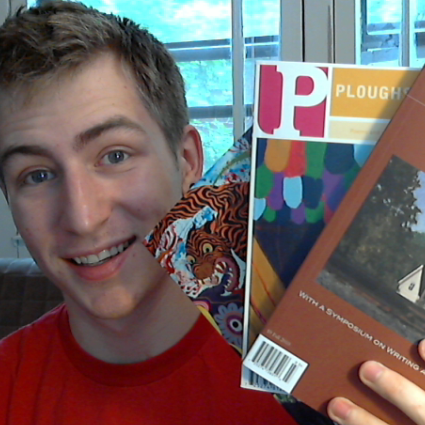 Doug Lance is the Editor-in-Chief and Founder of eFiction Magazine.
He is a Michigander living in Chicago, graduate of Creative Writing from WMU where he studied under Jaimy Gordon (author of Lord of Misrule, National Book Award Winner 2010) and Thisbe Nissen (author of The Good People of New York). He works with authors in all stages of their careers as an editor and marketing/publishing consultant. You can find him on Twitter @DougLance or at his magazine's social network, Authors
Image: Flickr CC Longzero
Leave a Reply