Podcast: Download (Duration: 1:02:25 — 50.7MB)
Subscribe: Spotify | TuneIn | RSS | More
How can you keep writing when midlife brings grief, exhaustion, rage, and a creativity that seems to have dried up? How can you accelerate if midlife brings you more energy? And how can you market your books authentically when your energy and your interests have changed? Jordan Rosenfeld shares what she learned from writing through her own pause.
In the intro, how to write short stories [Novel Marketing Podcast]; Bestsellers: Excavating the Tools and Techniques of Successful Novels – Kristen Tate.
Plus, Hugh Howey: The AI Bubble Explained; NEO writing software; Will the AI Bubble Destroy our Retirement? By Mr Money Mustache; Future Vision X Prize winner, The Gifted; and my Cathedral Zero trailer; How to Market a Book Fourth Edition survey.
Today's show is sponsored by ProWritingAid, writing and editing software that goes way beyond just grammar and typo checking. With its detailed reports on how to improve your writing and integration with writing software, ProWritingAid will help you improve your book before you send it to an editor, agent or publisher. Check it out for free or get 15% off the premium edition at www.ProWritingAid.com/joanna
This show is also supported by my Patrons. Join my Community at Patreon.com/thecreativepenn
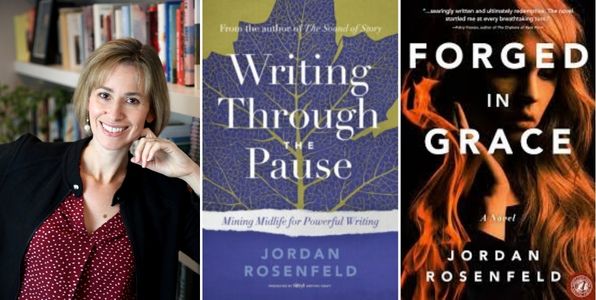
Jordan Rosenfeld is the author of psychological suspense novels and books on writing craft, as well as an editor and writing coach. Her latest book is Writing Through the Pause: Mining Midlife for Powerful Writing.
You can listen above or on your favorite podcast app or read the notes and links below. Here are the highlights and the full transcript is below.
Show Notes
- What midlife is, and why so many changes seem to arrive at once
- Disenfranchised grief, empty nest, perimenopause and the losses nobody talks about
- A fallow period is a germinating period, not a dead one
- Don't isolate, try something new, and learn to write as play
- How to market your books in a way that reflects who you are at your core
- Vulnerability, curation and how much of yourself to share online
You can find Jordan at JordanRosenfeld.net.
Transcript of the interview with Jordan Rosenfeld
Jo: Jordan Rosenfeld is the author of psychological suspense novels and books on writing craft, as well as an editor and writing coach. Her latest book is Writing Through the Pause: Mining Midlife for Powerful Writing. So welcome to the show, Jordan.
Jordan: Thank you so much. I'm so excited to be here.
Jo: Yes, this is an excellent topic. First up—
Tell us a bit more about you and how you got into writing and publishing.
Jordan: Absolutely. I'm really one of those annoying writers who's been writing all my life since I was a little girl, and it was all I really wanted to be or do. I'm a Gen X-er, so of course we grew up before the internet, and I read for pleasure and escape.
So I was really dogged in figuring out how does one go about becoming a writer, because it was the only thing I wanted to do.
I remember going to the library and checking out—eventually, later in my 20s—this massive tome, I forget what it was called. Like the Writer's Guide to Publishing, one of those big old things that has all of the editors, agents and stuff.
It was really just figuring out how to do it and sending snail mail queries and going to writing conferences. So I think I was just dog on a bone with it, really, since I was young. Like anything, once you get your toe in, it's a little easier to keep publishing.
I laugh because the first traditionally published book of mine was actually a book on writing craft before I had published any of my novels. So that felt strange, but I wasn't complaining at the same time.
Jo: So when was that, and what has your career looked like so far?
Jordan: So I published Make a Scene: How to Craft—oh my gosh, I'm forgetting my own subtitle—Crafting Powerful Scenes in 2005, which means I pitched it in 2003. That was the beginning of my era as a writing craft teacher as well. I was right out of graduate school at that point.
Then eventually I published my first novel. When I say my first novel, I just mean the first one that hit the world. It wasn't my first one written, but Forged in Grace. Then I eventually started putting out a writing craft guide every couple of years, just thanks to the wonderful people at Writer's Digest.
I just found a niche early on. Sometimes that just happens. I also like to point out that I was pitching books at a time before this whole concept of platform was a big deal. So you could be just any old body without a big following, because we didn't really have social media.
I did write for the magazine, the Writer's Digest magazine, which I think gave me a leg up in the book part. So writing craft became my niche, and then I always have really found success with small press for my novels.
So my current publisher is called Sibylline Press, and they are a publisher of women 50 and over, actually. That's their whole thing.
Jo: Oh, okay. That's interesting. Well, we're going to come back to the book in a minute, but just in terms of that journey, it's quite interesting. You mentioned platform there, that changed, and Writer's Digest publishing themselves got into trouble, didn't they? They got bought by a different publisher.
Jordan: Yep.
Jo: So you've been through some changes. Well, we're going to be talking about change in general, but changes in the industry have also happened.
So how have you navigated all that change over time?
Obviously a lot of listeners to this show are independent authors as well, so thoughts on how things have changed in the industry.
Jordan: Well, what's interesting is Writer's Digest actually went bankrupt. They got bought by another company who just mismanaged it, called F+W Media, and they went bankrupt. So a lot of us authors were terrified that all of our books were going to just revert.
I mean, it was fine to have the rights back, but we didn't want to republish ourselves at that time. So they did end up getting bought by Penguin Random House, which means our books are still alive in that traditional way.
So Forged in Grace, my first novel, I was in the process of querying agents, and then a friend of mine and I decided to start this thing. This was 2012, '13, this independent publishing collective. So we were going to act like a publisher but publish books. Basically it was people doing work trade.
We had someone who did cover design and someone who could do layout and marketing and all these things, and we came together. So I did publish my novel that way, and actually it was the time when Amazon was still quite favourable to indie authors. You could really make a decent amount of money.
Then my partner and I just… It didn't last. There were a lot of different reasons why we didn't, and it has nothing to do with the idea, which was totally working. I have really seen how the capitalist machine seems to continually come in and eat away at whatever profits there are for independent authors.
I've seen authors have to become marketers. We went from being people who could write, and then someone else would handle that, to having all of us have to do it ourselves, and now content creators. So I think a lot of us feel really exhausted, which actually is not unrelated to the book of mine that's coming out.
So I worry. Of course, we haven't even talked about AI, if we even want to, but I do worry a little bit about the future of publishing, but I'm not a pessimist in the sense that I don't think it's going away.
Jo: Oh, no, absolutely, I agree. Changes, I think, are what this is all about. Well, let's get into the book then. Let's start with a definition.
So what are you defining as midlife, and why is this such a change for many people?
Jordan: It's a very buzzword, midlife. So I will say it's a mental state as much as an age, because a lot of people start calling themselves or saying they're in midlife in their 30s, right? So it's not a hard age, even though you might say it's in your 40s or 50s.
For me, it's really the point at which I find people start to realise that they have less time ahead of them than behind. You might find yourself maybe a little past what I'm calling the striving stage of life, where you're focused on building career and identity and family, and all of that.
It also seems to coincide for people with multiple challenges at once. So maybe you're dealing with health issues or perimenopause or aging, and maybe you're helping your parents or your fledging teenage children, if you have children.
So there's a lot going on for people, it seems, at this stage of life, and I've interviewed 28 people for my book who range in age from 37 to 81. So there is definitely a wide range of age.
Jo: Yes, I think that's interesting. I almost wonder whether it is a realisation of changes. I mean, again, we'll just say menopause because I feel like for me, that's when it really kicked in, was there was a health hormonal shift, and I started feeling very different.
I started questioning a lot of things, and so much came up for me that I almost felt was out of my control. I think that was the biggest thing that happened for me, was realising, “This is out of my control,” and I don't particularly like that.
It felt like there was a lot of grief at midlife, and you mentioned there parents. Obviously some people's parents are dying, children are leaving.
Is grief a big part of this, do you think?
Jordan: Absolutely, and I like what you said about it often is a stage where people feel out of control of things, their bodies, their life circumstances. There's also a little bit of a, did I do everything I wanted? What will the next X years of my life look like, if they can get there?
Grief is a huge part of the transition, and I think grief is interesting. Right now, I'm in empty nest. I just fledged my son a month ago, and it did hit me harder than I thought it would, even preparing. So there's these kinds of grief we don't really give cultural credence to.
You can call them disenfranchised grief, where nobody died, and in fact, the things happening could be conceived as positive if you let them. But a child moving out of the house and you having to completely rearrange your identity, there's a grief involved in that. Or not seeing that child that you love so much.
Aging, dealing with aging parents in a healthcare system that doesn't offer supports, while you're trying to be a creative person.
Or the perimenopause thing is huge for a lot of people, because a lot of people were not told anything about this transition, and it can last 10 to 15 years for many people, and radically change your mind, your mental energy, your capacity, your executive functioning. It's huge.
So I definitely started writing this when that was happening to me, the perimenopause transition, but I also like it. As a creative person, I like the idea of a pause for anyone being a number of things that can happen in midlife.
Jo: Yes, and I think that's really important because, as women, that's one thing, but men go through different things, and people who identify in different ways go through different things. So we're not saying that it has to be specifically around menopause at midlife.
I think there are lots of different ways that this can show up, and of course, this is a show for writers. You're writing the book for writers.
So in talking about creativity, let's talk first about if people find that their creativity has just dried up, that it's almost died.
How can we learn to accept a fallow time, or perhaps accept and embrace a time of not plenty?
Jordan: That's a great question. First of all, I really looked into the idea of what fallow means, and you realise that a fallow period is not a dead period, it's a germinating period. It's necessary, right, for crops to come back. So I really love this metaphor of not seeing it as dead or gone, but as germinating.
I took a lot of relief and inspiration from this, it only exists as an audiobook, by Clarissa Pinkola Estés. She's the one who wrote Women Who Run With the Wolves, but she wrote a book called The Creative Fire, and she describes creativity as an infinite creative source that is never gone, but what happens is our access to it gets blocked.
So when I conceive of a fallow period as something in me is blocking access to my creativity, not that the creativity is gone, that was the first key for me. I also recommend that people work backwards and ask themselves, what life experiences, frustrations, disappointments, what burdens have you been dealing with?
There's usually a path back to what is preventing you from having access. And I really find the first thing is you need to apply gentleness and patience with yourself, and second, honestly, it sounds silly, but really reframing this idea that your creativity is not gone. It's not dead. It's germinating.
My therapist gave me the term rooting. She's like, “Oh, you're rooting,” like you're putting down roots, but you don't know what, if anything, is going to flower or bloom.
I was like, “Oh, I'm rooting. I'm not dead.” So I think it's a lot of reframing what we can do about it, rather than just conceive it.
Jo: Yes, I remember listening to that audiobook. I remember her voice saying la chispa. Do you remember? La chispa. I don't know if that means fire, but I remember it. I've listened to that, and you brought it up again. La chispa, yes.
I feel like that Women Who Run With the Wolves is just such an excellent book that we come back to at different points in our lives.
On other things, I feel like sometimes—you mentioned the word exhausted earlier—sometimes people are just exhausted. You are just tired. You're fatigued, and perhaps you just need a break. It doesn't need to be anything more than that, right?
You can just say, “I've got a lot going on. Maybe I just need to not do anything.”
Jordan: Absolutely. Actually, I find a lot of creative people are very driven in different ways, not necessarily ambition-wise, but driven to create or driven to express themselves. So sometimes that drive energy persists even when you don't have the energy for it.
So then we go into all this mental stuff about, “Well, something must be bad and wrong and broken,” rather than, “Oh, maybe I do need to be resting or conserving energy for myself right now.”
I think really it's having that confidence or trust that it's going to come back that is hard for a lot of us at midlife. We really think it's gone.
I do think that this is a stage of life where really getting support is necessary, whatever that looks like. I understand that things like therapy are not always accessible to everyone for cost reasons or time, so maybe it's your best friend or someone you see at the coffee shop or the gym or partner, anything.
Or it's two people who are both feeling creatively stuck and frustrated who say, “We're just going to get together once a week and see what happens,” talk, laugh, that kind of thing.
I just want to add that I really feel that if we're relying on our usual, typical, or former ways of doing things at midlife, they often fail us. It often requires a shift.
Jo: Yes, I also think that our mentors in books—I mean, you've mentioned there the Clarissa one, and of course your own book. I found when I needed to withdraw, I was reading a lot of books on the power of the older woman. Reclaiming the crone. I mean, I love this reclaiming language. The hag.
There's these words that we could reclaim around becoming older, and the cultures that respect elders, and what does it mean to move into that stage. I must have read 20 or 30 books in a period of a year of really trying to get to grips with things.
I feel like we can find therapy in these book mentors, as I like to call them.
Jordan: Yes. Absolutely. I don't know where I would be if I hadn't had book mentors most of my life. In fact, in a later chapter in the book, I quote Ursula K. Le Guin, who was obviously a science fiction writer, but notorious for really reclaiming older age.
She has a whole essay on the crone, and really the beauty of that stage of life, which is what I'm now aspiring to, because you've gone through the hardship of midlife, but you come through with more wisdom, more certainty.
Maybe just a little bit more, “Oh, yes, I've been through these ups and downs, and I know I can come out the other side.”
Jo: So I guess on the one hand it can be, at that time, a fallow, it can be that time of exhaustion. As we say, this isn't just a moment in time. This can go on for years.
Sometimes it can be a quickening. There can be a desire to accelerate even, and also sometimes we might need some tough love. I think that might also help.
So what are your recommendations for those who feel the need to shift up a gear, or who want to move forward?
Jordan: Yes. I mean, I think one thing is not trying to do it all yourself. Seek out other people who you can connect with. For me, what got me out of my fallow period was I joined someone. We do a silent write and then we talk shop afterwards. It was a fellow writer.
So I logged on at 8:00 in the morning and we all just got together and wrote, and then we talked. There was something about not isolating, I think, is key. So not isolating.
Then I'm really just a big fan of trying something new. It's that whole metaphor, right? If you're doing the same thing, expecting different results. So if something has changed for us at midlife and we don't feel the same and we can't access our creativity in the same way, then we have to do something different.
Another thing that I had to let go of was every time I sit down to write, it has to be purposeful. It's going to become a book. It's like, can you just play? What does it look like to write as play? That was a really new concept to me. Obviously I have joy in the writing process, but I was attaching it to a product.
So that's honestly one of my biggest pieces of advice drawn from my experience and others, is try something new. Be a little bit brave. Maybe it's not brave, but don't be afraid that everything is going to lead to something that'll be hard, that'll be scary.
Let's face it, nobody's going to do it for us. There's always that reminder. If you just sit around feeling bad and wonder when it's going to stop, it may not stop on its own unless we try something new.
Jo: Yes, reframing things. I think also as creative people, as writers, we do feel better if we are creating and writing. It may be that writing isn't the thing you need right now. It may be that you want to get into, I don't know, painting.
I've been doing different things, like I did some stone carving, and I'm doing really random things, and not in a serious way. So as you say—
Maybe writing for us is too serious, and so we need to just change it up a bit.
Jordan: I had a lot of my interview subjects do that. They are like, “Well, when I can't write, I paint. When I can't paint, I knit.” I was really impressed at how many people will just keep that creative energy going in another form.
I found that very inspiring, because while I don't consider myself deeply creative in any other medium, it did make me think, what else could I do that feels creative? For some people that's cooking food or, I don't know, organising closets. I really don't know, but there are ways to transmute that energy.
Jo: Yes, and I mean, you mentioned there about trying something new in our writing as well, and I did find that my interest shifted, and I did a lot of long distance walking and I wrote a pilgrimage memoir, which is quite out of character.
Then I also did a book on writing the shadow, that darker side of psychology. This did not fit with what people expected from me at all.
I feel like it is scary, but we are also making money out of this, and when things don't fit with what people expect of us, it can change things in terms of our business. So how do we deal with that?
How do we lean into change but also bring our audience along?
Or I guess just lose some of them.
Jordan: Well, it's interesting because I think that this relates to marketing ourselves, but I really think that authenticity is where it's at.
If you can present yourself as real, authentic, this is what I'm doing, this is what I'm interested in, that is very appealing to people, right? More than, well, this is the niche I've been in my whole career so I can't break free from it.
I love when a writer I've been following for years does something different, suddenly experiments and writes a new book. I actually find that very exciting as a reader.
So to me that's a lot of external pressures that say you have to stay, if you're known for being a crime writer you have to stay a crime writer. That's very much the publishing industry, the culture. That's not true to how people are in real life.
There's a writer that I mention in the book, she's Margaret Mead's daughter. Of course, this is midlife, names go out of my head. It'll come back to me before this is over.
She talks about how in her interviews with people—so she researches people in midlife and beyond—most people's real careers and creative lives are not a straight line. They don't follow the neat plot, the hero's journey, right? They actually are very meandering, particularly women's.
Women's tend to be more meandering, probably because, yes, they interrupt their careers to have children. They caregive, all of these things.
So I am really a big fan of let that meandering happen. Be open to that rather than, it has to be this way and only this way, because we don't grow. That's not a growing edge, right? If we just stay doing what we always did.
Jo: Yes, and as you say, some people will come along with you. Also, obviously we're a very similar age, and you tend to attract the people who are similar to you, and who are either going through similar things or recognise themselves in you. So I do agree with you. It is about being authentic.
The problems only come when you try to hide that change, perhaps. I mean, I laugh at, sometimes you see author photos that were taken 30 years ago. You're like, “I've met you. You just don't look like that anymore.”
Jordan: You don't look like that. I know. I'm a big fan of truth in advertising in that regard, too.
Oh, and the author, it's Mary Catherine Bateson, so she was anthropologist Margaret Mead's daughter.
Jo: Well, on that, let's just mention this, because I sent you written questions for this interview. Part of the reason I do that, one, obviously, I'm respecting the person I'm interviewing, and I want to show you how the interview's going to go, and I never mean to catch people out.
But also, as a woman in midlife, I forget things all the time. If we're having a conversation and I forget where we've gone—I take notes and everything, but I need to write things down more. If I am having an interview myself, I write down notes, even about my own books.
So this is something that's changed. I used to be able to remember things a lot better. So this is something that I've had to actively do, and presumably you have, too, in order to continue to be the professional we've always been.
It doesn't mean we're not allowed to forget things, but it's almost like I am shifting my practices in order to help my midlife self.
Jordan: Absolutely. That's a really great way to put it. I talk about it in the book as adapting. We adapt ourselves.
I use an example, one of my students who came to take my classes in his late 80s or early 90s, I kid you not, who was still treating himself as a student of writing. During the time he was in my class, he actually ended up having a stroke and had to relearn to speak in his 90s, and did, and write.
So he was constantly adapting new techniques to be able to come back to his creative self, and he really inspired me. That's a very extreme example, but I do the same thing. My desk is littered with Post-it Notes. My phone, I put anything you can possibly imagine as a reminder into my phone, with an alert.
I've also accepted output has changed. So this idea of I used to be able to be so prolific, I don't expect that of myself anymore. If I sit down to write, I meet myself where I am, and if I get some words out, great, I wrote.
It's a lot of that gentleness, just appreciating that I am different rather than trying to force my old modes upon myself, which doesn't work anyway. So I can try, but it will fail. Then I'd be frustrated with myself, which was part of my midlife transition, was trying to do everything the same way, failing, being mad at myself, that whole journey.
So I'm grateful to have moved beyond that and recognised that I have to move slower. I am less productive. I am narrowing the scope of my creative life, and that's not a bad thing.
Jo: Yes, and that's not a bad thing. That's the important statement there at the end. It's funny that I feel the need to emphasise that, because why do I have to emphasise that? Because we're just in this culture of obviously more must be better. So that's the thing.
I guess I've also felt a similar way in that I have a much better ability to say, “I don't want to do that, so I won't do that.”
Or, I asked you if we could reschedule this interview because my energy just wasn't there, and I know that I can't do an interview like this without some energy, and that's the way to serve the audience, and you were very graceful and said, “Of course.”
So I think this, “I don't want to do this, so I'm not going to,” rather than pushing into it. But then, of course, we have to sell books. We have to do marketing.
So how do we balance these things?
Jordan: That is the frustration. Well, first of all, you need to honour that feeling. I hate that it sounds cliché, but we have to honour that part of us that says, “I don't have the energy to do that anymore, or in this way,” because if you ignore that, you're going to end up sick or injured or frustrated or something.
So the way that I have been doing it… It's just a reality of marketing yourself as a writer that you must have a presence somewhere online, right? And you must put something out there to let people know where to find you. Unfortunately, there's too much noise, too many writers, too much competing for people's attention.
So I realised the only way I can do it is when it reflects who I am at my core. Which means if I'm going to make videos, which I have been doing lately, they're going to be goofy like me, right? I can't do a serious, polished video. It's not in my nature.
If I am going to have to keep a Substack blog, which I do, and write content, it's going to have to be about issues that are of interest to me at this time in my life.
I also find the more that I can interweave my marketing with promoting other writers in some way, that feels really honest. So interviews, like you do, I do them on my Substack. That feels really good to me because then it's not all about me, right?
So I think that's really the key, is finding this fit, and I think that in a way that's actually what's made a lot of content creators somewhat, let's say, famous, is because they have found something that works for them.
It's comedy, it's serious, whatever it is, it reflects them and it feels true to people, whether or not it is is another story. So for me it's not so much truth, but afterwards, do I feel sick inside, or do I feel like, no, I was pretty much myself? Then I can do it, and then it's actually fun.
I also have to say, I've never been very tech handy or gifted, and I was like, “I'm goint to learn Canva. I'm going to learn edits on reels.” I'm just not going to be that person who says, “I'm too old to learn,” or, “I've done it this way for so long, I can't do it another way.”
That's actually been really fun and freeing. I didn't expect that.
Jo: Well, yes, you have to learn something new occasionally. I mean, even this podcast, which I've been doing since 2009, how I did it technically back then and how I do it technically now is completely different because the tools have changed.
It's still the same RSS feed, amazingly, even though people don't even talk about those anymore. So, yes, we do have to learn some things, but we don't have to learn everything, I guess. We don't have to do everything.
You talk there about being yourself and authentic, and you have a chapter in the book about unmasking the self and this vulnerability, which can lead to creative breakthroughs, but this can also be really difficult.
Certainly the hardest bit of the time I was going through the early perimenopause and the depressive end of things, before I found HRT, which I know doesn't work for everyone, but worked for me. I didn't talk about it then, and it took a couple of years before I was able to talk about these things.
So how can we embrace vulnerability but still protect ourselves from the world when we need protecting?
Jordan: It's interesting, because I've thought a lot about this. I think that we misconstrue vulnerability as only baring our soul, or baring our soft parts, where we're open to judgement and attack.
The more I think about it, I actually think that authenticity can be vulnerable, and also being more direct. Just being like, “This is what I will allow. This is what I won't allow. This is who I am. This is who I'm not,” is a form of vulnerability.
That might sound strange, but it's a way of saying, “This is what I'm allowing you to see of myself.” It's an honesty, I think.
I find with online stuff, a lot of people are getting to the realisation they have to protect, I think, more from a privacy standpoint. Not tell too much that leaves you open to attack, or leaves you open to having somebody actually come in and steal information from you.
So the way that I've conceived of it for myself now is vulnerability is to be honest and direct, but that doesn't mean giving everything away. I guess this word curation rolls around right now. I don't think curating is a bad thing. It's like, I'm going to tell you as much as I feel comfortable telling you.
In this book, I call it partially like a memoir, because I reveal personal things about myself, but I'm revealing them very carefully, let's put it that way. I'm also trying to protect other people's stories. My family, if I'm talking about them, I'm being very careful about how I talk about them.
I'm also like, I have to say something about me. I can't talk about this experience but not share my own process, right? So it is a line we walk.
I have a couple of interview subjects who found for them, the way they are vulnerable is to transform their personal truth into fiction. So they tell real truths, but they fictionalise it, because that way the truth is still coming through, but they don't have to do that whole soft belly open to the masses, if that makes sense.
Jo: Yes. I think for me, it was just time. When I read some of what I wrote then, and even what I put into my pilgrimage memoir, for example, I'm not that person anymore. There was a period of time when that happened, and I read it and I'm like, “Goodness me,” but the distance helps.
You can share what happened later on in a way that almost feels like fiction, even though it happened.
Jordan: I like that. I like the fact, too, so in memoir there's this concept of two voices. There's that voice of the moment, the lived experience, and then the voice of greater experience that comes later, the meaning maker.
So there's a nice tension that can exist when you look back at who you were, or writing that came from a different time, and you bring the version of you today.
I find I have a lot of compassion for my former self. I can see how hard I was working, or how hard I was trying to impress someone, or any of those things. I think if you can be compassionate towards your older self, meaning even a month ago, then that can come through, too. It's interesting.
Jo: Yes, and we've been all gentleness and kindness and lovely, but let's get into anger, because anger and rage is also part of grief as well. I was thinking about this, and I have a little mantra that I use on difficult days, which is, “Don't burn it all down.”
Literally sometimes I just say to myself, “Don't burn it all down.” That might be a day I don't do an interview, or that might be a day I don't go anywhere near the internet, and I don't go anywhere near social media. I just try and get away, go for a walk or something.
This is difficult, because sometimes you should burn it all down, and I do struggle with this, too.
When do we know that radical change is needed? And when should we go slow and not kill it all off?
Jordan: That's a good question. It's going to be individual, right? But what your question made me think about is that the people I've spoken to find that at this stage of life, I describe it as a heightened sense of either more or less.
Either there's a lack they can no longer sit on and it's causing frustration and anger, or there's a too muchness, like burnout or overwhelming responsibilities. So couple that with hormonal changes for a lot of people, and it's a fire keg.
I myself have gone through it. I will say in the early stages, when that kicks in on a hormonal level, a lot of people find that it almost has to take you by surprise, I think. You almost discover you're going through it by having a rage reaction. That's my experience.
Once you do, then it becomes our responsibility to not spew anger at everyone. So it is about finding ways to channel it that are healthy. Whether that's, “All right, I feel it coming on. I'm taking a walk. I'm going into nature where I can be my full self, or I can let it simmer down.”
I also find I'm more honest and more direct as a result of it, so I don't check all of it. But it's a good question, because I feel it too, and there have been times it literally felt like somebody flipped a switch in my back, and rage emerged, or frustration, whatever the feeling is. So I think it's really paying attention to yourself.
I hate the word triggers, but let's just use it here to understand what's triggering it. You've got this baseline, perhaps changed hormonally. You may be going through a lot at midlife. What in the moment triggers that urge? And see if you can either avoid it, or can you remove yourself from it somehow.
I'm just going to be honest, people in midlife are going to lash out, and sometimes the best thing other people can do is get out of the way. I am a big fan of saying it is our responsibility to not wield it inappropriately, I should say, but acknowledge that it's real.
Jo: Yes, I mean, maybe sometimes it is a good feeling. There's righteous anger for things that we should be angry about in the world. It's just sometimes it doesn't come up that way.
Sometimes it might not be so much, and I think for me, it's when do things come up over and over again? And are there ways that it could be changed?
This is not something that I get angry about, but this podcast, for example, regular listeners will know that for a long time, for, what, 15 years or something, it was on a Monday, and I got to this point where I thought, “I need to kill this podcast because I'm working every weekend,” because I often was, I need to record the introduction.
So my attitude was, “I just need to burn it all down, kill the podcast after all these years.” Then I took some time out to think about it and moved it to a Wednesday.
Jordan: Yes.
Jo: And it was like, “I'm sorry, how did I not figure this out ages ago, that all I needed to do was move it?” And so if you do feel, people listening, if you feel like, “Oh, I just have to destroy this whole thing because I need…”
Whatever it is that you need, sometimes there is another answer.
It might feel obvious later on, but perhaps you just couldn't see it at the time.
Jordan: Absolutely, and I'm trying to think how to put this, but there's a version of this process where we go through this change in our emotions that is a little bit out of our control, and we have to just go, “Wow, I'm changing, and in the process of that change I might behave in ways I don't prefer to continue behaving,” right?
It might happen, and then there's a reaction. I think we really just have to be aware and patient, and then learn to do things differently, like you're saying. We have to change in relationship to this change. We can't try to keep being the old version of ourselves who was nice and agreeable and didn't ever get angry.
I know so many women, and also non-binary and gender fluid folks, who are just like, “What? Who am I? Where did this come from?” You're like, “My operating system is actually different now,” which is fascinating.
Jo: It really is fascinating. Well, as we come towards the end, let's also reframe this whole narrative. I feel like we talked a bit about this, about reclaiming the crone and all of this, but how can we make this next phase incredible?
I'm 51. I think we're a similar age. I'm fully intending to march into at least my 90s. So we've got many years ahead of us. It is not all downhill from here. I lift weights, I do a lot of stuff, and I feel like this should be an upswing in a different way.
What can we put in place so this positive aspect becomes true?
Jordan: Well, I think the first thing is we need to not see it as midlife crisis. I hate the word crisis because it suggests something negative, and I like to think of it as a midlife transition.
It's really, I think, only crisis in that, first of all, we scare ourselves, but when we don't get the support, or we don't heed the call that our psyche is asking of us, or we buy other people's attitudes about what midlife should be.
I am a big fan of this great book by Sara Lawrence-Lightfoot called Third Chapters or Into the Third Chapter, and she writes about people who decide—and I think this is part of it, it's intentional.
You have to decide, this third chapter of my life is going to be something wonderful, and you decide, what is the thing I want to do? What am I going to focus on?
So I think, first of all, just making that mindset shift is really important, and it's all the things we've been talking about. It's trying something new. It's figuring out what makes you thrive and feel excited at this time of life.
It's acknowledging and honouring that you feel different, and mourning what you've lost, but also looking at what you may be gaining going forward. So I think just so much of it is about attitude. If you decide that you're in crisis and that it's all misery, it's harder to make those steps forward.
If you see yourself as germinating something new—and allow yourself to be surprised—and the only way to do that, in my opinion, is to try something new, to do things a little differently, and embrace all the wisdom you're about to gain.
Jo: Yes, and all the other people who are on that journey with you. I think your friendships shift as well. I was walking in Portugal last week and met a group of older women, and it was just such a laugh. It was just really fun.
Just recognising the different parts of life, and that the kind of laugh I would have had with women in my 30s would have been a very different kind of laughter.
Jordan: I love that. I love it. Keep company with people you want to be more of, or more like. I think that's really important, too.
Jo: Great.
So where can people find you and your books online?
Jordan: Anywhere books are sold, actually, but you can go to my website, JordanRosenfeld.net.
I like to promote, if you're going to online shop for books, I like bookshop.org, or go to your local indie bookstore. Or you can buy many of my books directly from SibyllinePress.com. All of my Writer's Digest books are available through anywhere.
I also like to draw people to my Substack, which is called Writing in the Pause, and that's JordanWriteLife.substack.com.
Jo: Fantastic. Well, thanks so much for your time, Jordan. That was great.
Jordan: Thank you. I really appreciate it. It was fun.
Leave a Reply