Today I interview David Gaughran, author and outspoken commentator on all things indie.
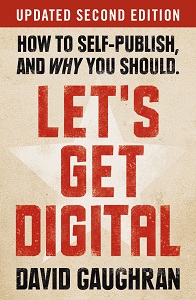 David has just released the second edition of his fantastic book, Let’s Get Digital: How To Self-Publish, And Why You Should.
This book is one of the reasons I decided NOT to write my own book about how to self-publish. When it is done so well by a fantastic author, why reinvent the wheel! I highly recommend grabbing a copy and even if you know what you're doing as an indie, you'll certainly learn something from the interviews in the last section.
What are some of the big changes in the publishing industry between the two editions of your book?
That was probably the most interesting part of writing this new edition, charting all the changes. It’s only when you take a step back that you realize how much has happened in the last three years. A lot of what was theory in 2011 has become fact.
Self-publishing has gone mainstream, with indies grabbing around 25% of the US e-book market – from scratch! Borders has gone out of business, taking its 600+ stores out of existence (and costing 12,000 people their jobs). Publishers are merging to try to weather the storm, but they still haven’t become that much smarter about how they approach e-books, digital marketing, or this thing the kids are calling “the internet.”
For self-publishers, the amount of change has been equally breathtaking.
When I wrote the first edition, selling 1,000 books in a month was a big deal. A really big deal actually. But now you can sell that much in a day with a BookBub ad. Authors tend to focus on how much competition has increased (there are 3 million books in the Kindle Store today versus maybe 1 million in 2011), but they forget to factor in how much the digital market has swelled and that we now have much more sophisticated tools to reach readers.
On top of that, self-publishers are constantly innovating and sharing. While I’m glad I started when I did, I wouldn’t be afraid of starting today or thinking that I’d missed the boat. Not at all. I think we’re still at the beginning of this revolution that’s reshaping our industry.
How has the public perception of self-publishing changed, and are we past the ‘stigma' label?
I’m skeptical about how much that stigma ever existed among the people that really count: readers. It definitely existed in the industry – among agents, editors, and traditionally published authors – and still does in certain quarters. But, really, that’s their problem. It doesn’t affect me reaching readers, building an audience, and selling books.
I think most agents and publishers are very open to signing indie authors. Out of those that aren’t, ask yourself this: do you really want to do business with someone with such an outdated view of the marketplace?
The market does feel like shark-infested waters these days with so many companies out to take money from authors.
How can people tell the difference between good and bad services? What should they definitely NOT spend their money on?
It's pretty tough because a lot of these scammers are so slick. What I would say to authors, especially those starting out, is that there are no shortcuts, and that goes for publishing books as well as selling them.
If someone is offering you an easy way to publish, or simple trick for selling more books, you should be automatically skeptical. Lottery winners aside, success usually requires hard work. If someone claims to be an expert who can put together a social media campaign that will lead to hundreds or thousands of sales, be automatically skeptical.
If a company offers you a hassle-free way of publishing your book, where they will take care of everything, be automatically skeptical. And if the company is owned by a traditional publisher, be very skeptical.
The biggest predator out there is a company called Author Solutions, which is currently subject to a major class action in the US for deceptive business practices. I've been campaigning against the company for a few years now, but this post is a good place to start if you don't know much about them.
The saddest thing is that Author Solutions is owned by Penguin Random House – which has done nothing to clean up those predatory practices since buying the company for $116m in July 2012. So when I hear publishers talking about re-imagining the industry, placing the author at the center, and treating writers as true partners, I always think to myself: talk is cheap.
Scammers aside, I go into some depth in Let’s Get Digital about what authors should do and not do in terms of marketing (and that goes for the time you spend, as well as money), but you can get the basics of the approach I suggest in this post.
You have a load of success stories in the book and what's encouraging is that it includes people who are NOT ‘big indie names.'
What are some of the common threads you see between these authors & how can people model their success?
I’m glad you liked that because I was doing something very deliberate with that section. The media tends to focus on the very biggest sellers: Bella Andre, Hugh Howey, HM Ward etc.
But this revolution is far deeper and wider than that. I think the real story is the hundreds and thousands of authors who maybe aren’t selling millions of books, but are making a living off this for the very first time, or paying their mortgage with royalties for the first time, all thanks to self-publishing.
I tried to select a range of authors from different backgrounds and genres, and with different paths to success. You have people like Bob Mayer who had millions of books in print when he was traditionally published, but his experience turned sour and he decided to self-publish and became a huge success (again) – with those very same books that publishers said were finished.
At the other end of the scale you have someone like UK author Mel Comley who never had a traditional deal, decided to self-publish in 2010, and took six months to make her first $100 on Amazon. Today, Mel has sold hundreds of thousands of books and is a New York Times and USA Today bestselling author, and she did that all on her own. I wanted to show there are multiple paths to success and each story is quite different, and I hope the overall effect is inspiring.
Authors are always looking for magic bullets, but here’s the real secret.
All of these writers decided to pick themselves instead of waiting to be picked.
They were all determined enough to keep at it until they were a success. And they all worked bloody hard at it too. You need a bit of luck, but you need to put yourself in a position to get lucky by honing your craft, putting your work out there, and being smart about how you reach readers. And you need to hang in there and keep at it. Again: there are no shortcuts, but success truly is attainable.
It’s not easy, but it is much more of a possibility than it ever was before. In other words, it’s down to you.
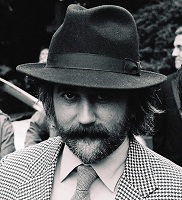
 David Gaughran is an Irish author, living in Prague, and he blogs on writing and the publishing business here. You can pick up the updated, expanded version of Let’s Get Digital: How To Self-Publish, And Why You Should.
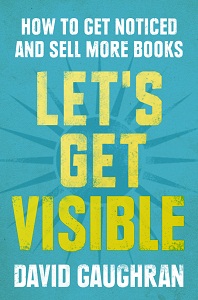
To celebrate the launch, he’s also running a sale on the companion book Let’s Get Visible: How To Get Noticed And Sell More Books which you can grab for the reduced price of 99c/79p.
If you have any questions for David, please leave them below, and join the conversation!