Why self-publish an ebook anyway?
When authors think about publishing a book, they are often focused on print, but putting an ebook out alongside your print book, or even just an ebook on its own, is a much better idea. Here’s why.
 Why self-publish an ebook anyway?
(a) Most indie authors make the majority of their income from ebooks.
In the financial year 2016-2017, I made 86% of my book sales income from ebook sales. There’s more profit per ebook because there’s no printing or shipping. Readers can also buy immediately they hear about the book, so the barrier to purchase is lower. If you don’t have an ebook version, you’re missing out on a chunk of readers and revenue.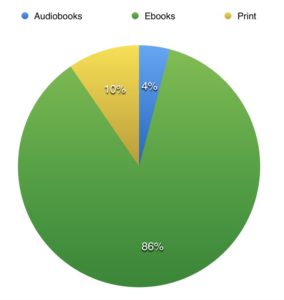 You can sell your books to anyone in the world over the internet without printing or shipping costs. You really can have a multinational global business from your writing desk, which is exciting!
(b) It’s a huge growth market.
There are reports in the traditional press about the slowing down of ebook sales in the US, but this is skewed by data that only report on books with ISBNs. Many indies, myself included, don’t use ISBNs for ebooks. In fact, Author Earnings reports in October 2015 that 33% of all ebooks sold in the US don’t have ISBNs and none of those sales are counted in the traditional press reports. The Feb 2016 report demonstrated that the percentage market share of ebooks by indie authors only continues to grow in the US market.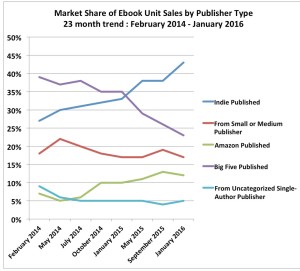 And remember, that’s only in the US. The ebook market is considered ‘mature’ in the US, UK, Canada and Australia, but most of the rest of the world has barely started on the digital growth path.
Two years ago, I had only sold books in five countries but as of July 2017, I have actually sold ebooks (in English) in 83 countries. Those sales streams are trickles right now, but they will only grow in the coming years as readers start to transition to digital. It’s inevitable with the rise of mobile technology and streaming internet.
And remember, that’s only in the US. The ebook market is considered ‘mature’ in the US, UK, Canada and Australia, but most of the rest of the world has barely started on the digital growth path.
Two years ago, I had only sold books in five countries but as of July 2017, I have actually sold ebooks (in English) in 83 countries. Those sales streams are trickles right now, but they will only grow in the coming years as readers start to transition to digital. It’s inevitable with the rise of mobile technology and streaming internet.
(c) The speed of publishing means you have control of when and how readers can get your book.
Once you click Publish, your ebook can be for sale within 24 hours, sometimes it’s up in less than 4 hours. So, you can publish and have a book earning you money before lunch. That’s just brilliant!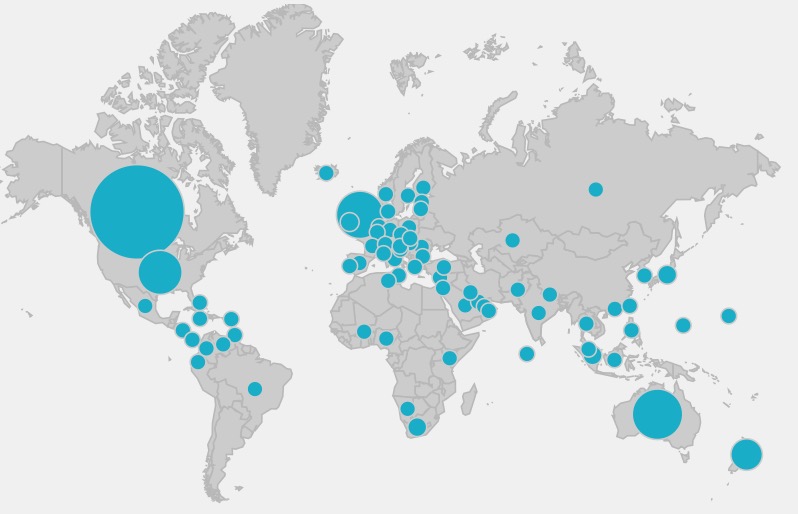
(d) Ebooks are lower risk because they have a lower cost of entry.
It is free to self-publish on the most popular ebook platforms. Obviously, you have to pay upfront for editing and cover design but the actual publishing is free and the stores take a small percentage of sales. Compared to most other business models, publishing in this digital age has low overheads, low entry costs and potentially a high margin of return. Hopefully, you’re now convinced that you need to publish an ebook. So, how do you get started? [This article is an excerpt from Successful Self-Publishing, available as a free ebook on all platforms and in print.]
How to format an ebook
You need a formatted ebook file to load to the publishing platforms. This is your completed, edited manuscript in specific formats: • .mobi for Amazon • .ePub for the other stores You have two options to produce these: • Learn how to do it yourself – as I have done – and it really isn’t that hard, especially if you have plain text books without tables and images • Outsource this task and pay a professional to format the book. Click here for links to book formatters. One of the reasons I like to keep formatting in my control is because we often change our ebooks over time. Every time I put out a new book in a series, I want to update the back matter of the previous books with links to the new book.
There are also the inevitable typos. No matter how many editors you use, somebody will always find a problem. Of course, this happens with traditionally published books too. It may be within a month or two, it may be a year later, but you know you’re going to want to fix it! If you have control, you can fix it yourself and upload a new file. If you outsource this task, you will need to pay for these updates and it won’t be as fast.
One of the reasons I like to keep formatting in my control is because we often change our ebooks over time. Every time I put out a new book in a series, I want to update the back matter of the previous books with links to the new book.
There are also the inevitable typos. No matter how many editors you use, somebody will always find a problem. Of course, this happens with traditionally published books too. It may be within a month or two, it may be a year later, but you know you’re going to want to fix it! If you have control, you can fix it yourself and upload a new file. If you outsource this task, you will need to pay for these updates and it won’t be as fast.
Do-it-yourself formatting
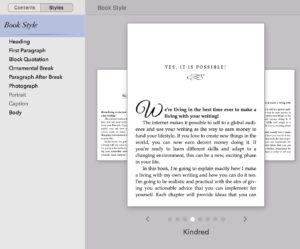 I use Vellum to format my ebooks (and you can also use it for print formatting too.) It’s incredibly easy to use and creates beautiful ebooks in multiple formats. It actually makes formatting fun and means you can update your books as much as you like.
 Click here for my tutorial on how to format your ebook and print book using Vellum
But it is Mac only. So, if you are on a PC, then you can use Scrivener for formatting, since many writers already have Scrivener as a writing tool. There are plenty of free tutorials online and I also recommend the Learn Scrivener Fast course which includes lots of mini videos on the functionality that will help speed up your writing and publishing process.
There are other options for doing it yourself.
• Jutoh has been recommended to me by a number of authors
• Read and use Zen of Ebook Formatting by Guido Henkel
Also, if you have books in print from previous publishing deals, you can get them scanned from print back into Word so you can produce an ebook from that retrospectively. Many authors who had deals over 10 years ago will own their ebook rights, so it’s worth checking your contracts to see if you can publish digital versions, even if a traditional publisher owns your print rights. [If you need legal help with this, check out The Self-Publisher’s Legal Handbook by Helen Sedwick]
Click here for my tutorial on how to format your ebook and print book using Vellum
But it is Mac only. So, if you are on a PC, then you can use Scrivener for formatting, since many writers already have Scrivener as a writing tool. There are plenty of free tutorials online and I also recommend the Learn Scrivener Fast course which includes lots of mini videos on the functionality that will help speed up your writing and publishing process.
There are other options for doing it yourself.
• Jutoh has been recommended to me by a number of authors
• Read and use Zen of Ebook Formatting by Guido Henkel
Also, if you have books in print from previous publishing deals, you can get them scanned from print back into Word so you can produce an ebook from that retrospectively. Many authors who had deals over 10 years ago will own their ebook rights, so it’s worth checking your contracts to see if you can publish digital versions, even if a traditional publisher owns your print rights. [If you need legal help with this, check out The Self-Publisher’s Legal Handbook by Helen Sedwick]
Considerations with images
If you have a lot of images in your book or a lot of complicated tables, then you will have more problems in formatting. You will also have a bigger file size, and although ebooks are typically free in terms of delivery, Amazon does include a delivery cost in their pricing setup. That will be higher if you have a bigger file, and images can really expand the file size. If your delivery cost goes too high, you’re not going to make much royalty. So, it’s really important to consider the size of your file. If you write children’s books, then consider the Kindle Kids Book Creator, which is a specific tool for image-heavy children’s books. Check out this interview on the tool and also this interview with Karen Inglis on all aspects of children’s publishing. You can also check out iBooks Author, which can be used for children’s books on the iPad as well as textbooks with enhanced video and images.
Amazon also has other tools for image-heavy books, including Kindle Edu for enhanced textbooks and Kindle Comic Creator for comics and graphic novels.
If you’re writing non-fiction with images, really consider whether you need them and whether they are critical to the reader’s experience. Authors can get romantically attached to images that actually might not be needed. It could be better to put your images on your website and include links within your books. This will get people over to your website, where they could potentially sign up for your email list. You could also put the images on a Pinterest board for social media sharing and use them for marketing.
The other thing to consider with images is ensuring you have the right license. Are they your own images? Do you have permission to use them and what type of license have you paid for? If you’re concerned about these issues, check out this interview with Helen Sedwick on legal issues for self-publishers.
If you write children’s books, then consider the Kindle Kids Book Creator, which is a specific tool for image-heavy children’s books. Check out this interview on the tool and also this interview with Karen Inglis on all aspects of children’s publishing. You can also check out iBooks Author, which can be used for children’s books on the iPad as well as textbooks with enhanced video and images.
Amazon also has other tools for image-heavy books, including Kindle Edu for enhanced textbooks and Kindle Comic Creator for comics and graphic novels.
If you’re writing non-fiction with images, really consider whether you need them and whether they are critical to the reader’s experience. Authors can get romantically attached to images that actually might not be needed. It could be better to put your images on your website and include links within your books. This will get people over to your website, where they could potentially sign up for your email list. You could also put the images on a Pinterest board for social media sharing and use them for marketing.
The other thing to consider with images is ensuring you have the right license. Are they your own images? Do you have permission to use them and what type of license have you paid for? If you’re concerned about these issues, check out this interview with Helen Sedwick on legal issues for self-publishers.
 Exclusivity vs. going wide
Before you publish, you need to make a couple of decisions that impact the stores your book will sell in.
 Exclusivity vs. going wide
(a) Do you want to publish on multiple platforms or go exclusive with Amazon?
You can publish on Amazon KDP as well as all the other platforms, but Amazon also offers KDP Select, which is a specific service that you can opt into for 90 day periods. It means that your books will be included in Kindle Unlimited, a subscription service for Amazon Prime members, where the books are more likely to be borrowed by readers. There are other advantages around free promotion days or countdown deals. You are paid based on pages read from a pot of money shared between authors at the end of each month. If you only have one book and are just starting out, then it’s definitely worth using KDP Select at least for the first 90 days. Or, if you have several books in unrelated niches, then it’s also potentially worth doing. But if you have multiple books in a series and you want to make a living with your writing, then going wide to other platforms is the best idea. It takes time to build your audience at other stores, and having multiple books in a series is the best way to gain reader loyalty and sales for the long term. Each store has comparative strengths and weaknesses in the different worldwide markets, so building for the future means going wide. You can also listen to/read this interview with experienced indie author, Liliana Hart all about going wide with distribution. (b) Do you want to go direct to the platforms or use an aggregator like Draft2Digital or Smashwords?
Personally, I choose to publish direct to Amazon KDP, Kobo Writing Life and iBooks. I also use Draft2Digital for Nook and other sites as well as Smashwords for some books.
But if the thought of publishing on so many sites makes you crazy, then you can use an aggregator like Draft2Digital or Smashwords and they will submit the books for you to the other stores.
If you go direct, you have greater control over pricing and metadata per store. There are also specific promo opportunities on some stores that are not available if you go through an aggregator. However, I will admit that it takes time to manage publishing and updating all my books on all the different platforms every time I want to make a change.
[This article is an excerpt from Successful Self-Publishing, available as a free ebook on all platforms and also in print.]
Where to self-publish an ebook
 Each of the platforms has a similar set of fields, even if their look and feel is slightly different. It’s important to note that none of the platforms require programming or any kind of technical ability.
If you can use Google and MS Word, you can self-publish an ebook!
The best way to learn is to actually set up an account on the various stores and have a go. If you have all the relevant information ready, it shouldn’t take too long to get your book out into the world. Exciting!
Here are the main sites for direct self-publishing:
• Amazon KDP
• Kobo Writing Life
• Nookpress
• iTunes Connect and iTunes Producer for iBooks
Here are the main distributors (where you load the book once and they distribute it to all the ebook platforms):
• Draft2Digital
• Smashwords
Personally, I go to Amazon, Kobo and iBooks direct and then use Draft2Digital and Smashwords for other stores. You will need to choose what’s the best option for you.
Each of the platforms has a similar set of fields, even if their look and feel is slightly different. It’s important to note that none of the platforms require programming or any kind of technical ability.
If you can use Google and MS Word, you can self-publish an ebook!
The best way to learn is to actually set up an account on the various stores and have a go. If you have all the relevant information ready, it shouldn’t take too long to get your book out into the world. Exciting!
Here are the main sites for direct self-publishing:
• Amazon KDP
• Kobo Writing Life
• Nookpress
• iTunes Connect and iTunes Producer for iBooks
Here are the main distributors (where you load the book once and they distribute it to all the ebook platforms):
• Draft2Digital
• Smashwords
Personally, I go to Amazon, Kobo and iBooks direct and then use Draft2Digital and Smashwords for other stores. You will need to choose what’s the best option for you.
The information you will need to self-publish an ebook
In this section, I will briefly outline the information you need to enter in order to self-publish. For Amazon KDP specifically, you can find their KDP Jumpstart material here. I’m assuming that your book is the best it can be and that you have used professional editors to make it a quality product. [Here’s a list of professional editors if you need one.]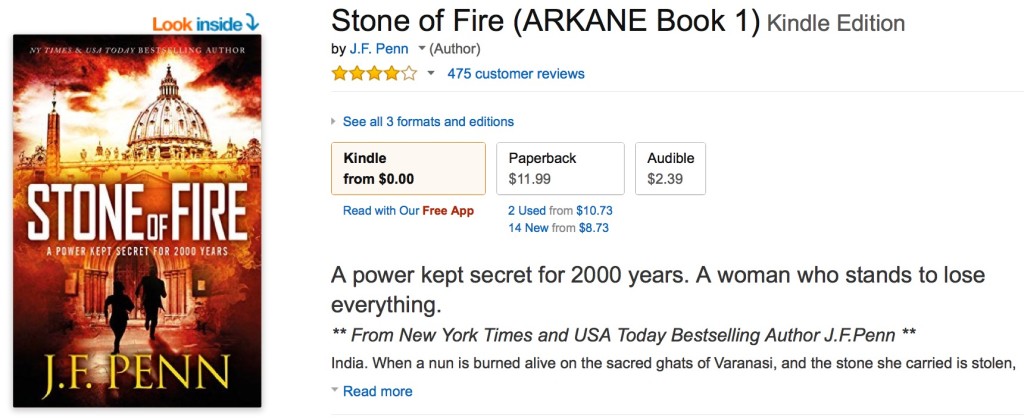 Book name/Title. You need to enter the exact title as shown on the cover in this field. This is because people used to ‘stuff’ keywords into the title field e.g. “Paranormal romance with a noir detective twist.” If it’s not on the cover, you can’t include it here! However, you can change your title if you want to rebrand the books in the future. It can be done, but it’s not easy. Here’s my own experience with changing titles and covers.
Sub-title. Optional. Often used for non-fiction books, and it’s recommended that the sub-title contain relevant keywords in a natural way.
Book name/Title. You need to enter the exact title as shown on the cover in this field. This is because people used to ‘stuff’ keywords into the title field e.g. “Paranormal romance with a noir detective twist.” If it’s not on the cover, you can’t include it here! However, you can change your title if you want to rebrand the books in the future. It can be done, but it’s not easy. Here’s my own experience with changing titles and covers.
Sub-title. Optional. Often used for non-fiction books, and it’s recommended that the sub-title contain relevant keywords in a natural way.
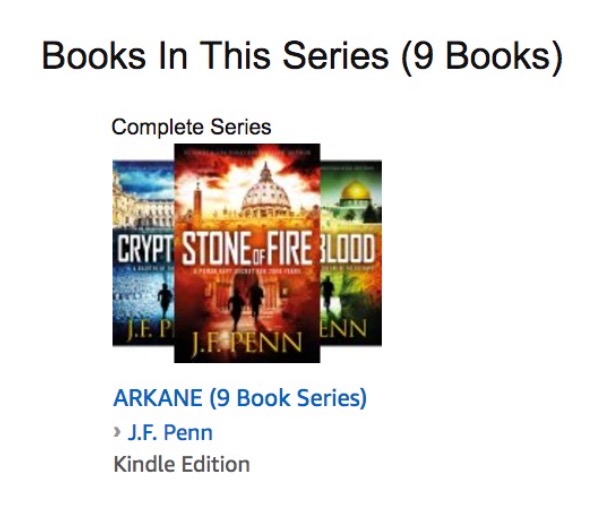 Series title and volume. If you’re an ebook reader, you will know how powerful a series can be. On most of the stores, the books in a series are now linked together and customers are notified at the end of one book about the others in the series. You can also use series for non-fiction in order to group books for a similar audience.
Edition number. If you substantially update a book over time, you can use different edition numbers.
Publisher. If you want to use the field, it can be your company name or an imprint name that you decide on, or you can just leave it blank. Readers don’t generally shop by publisher, after all.
Description. This is the sales description or the back blurb. [Here’s an interview about how to write an effective sales description.]
Book contributors. This is your author name and you can use whatever you like. I publish under Joanna Penn for non-fiction and J.F.Penn for fiction. [Here’s why I publish under two different names in case you’re considering it.] You can also add co-authors, translators, editors and other parties.
Language. Mostly, your books will be in English, but I have self-published books in French, German, Italian and Spanish. Indies are moving into translation as new markets open up.
ISBN. Optional. I don’t personally use ISBNs for ebooks and I use free ones for print.
Verify your publishing rights. Public domain books are out of copyright. So, say you wanted to publish Frankenstein by Mary Shelley, you could publish it but it’s likely that one of the official versions would sell better and it’s available for free everywhere anyway. For your own books, select “This is not a public domain work and I hold the necessary publishing rights.”
Series title and volume. If you’re an ebook reader, you will know how powerful a series can be. On most of the stores, the books in a series are now linked together and customers are notified at the end of one book about the others in the series. You can also use series for non-fiction in order to group books for a similar audience.
Edition number. If you substantially update a book over time, you can use different edition numbers.
Publisher. If you want to use the field, it can be your company name or an imprint name that you decide on, or you can just leave it blank. Readers don’t generally shop by publisher, after all.
Description. This is the sales description or the back blurb. [Here’s an interview about how to write an effective sales description.]
Book contributors. This is your author name and you can use whatever you like. I publish under Joanna Penn for non-fiction and J.F.Penn for fiction. [Here’s why I publish under two different names in case you’re considering it.] You can also add co-authors, translators, editors and other parties.
Language. Mostly, your books will be in English, but I have self-published books in French, German, Italian and Spanish. Indies are moving into translation as new markets open up.
ISBN. Optional. I don’t personally use ISBNs for ebooks and I use free ones for print.
Verify your publishing rights. Public domain books are out of copyright. So, say you wanted to publish Frankenstein by Mary Shelley, you could publish it but it’s likely that one of the official versions would sell better and it’s available for free everywhere anyway. For your own books, select “This is not a public domain work and I hold the necessary publishing rights.”
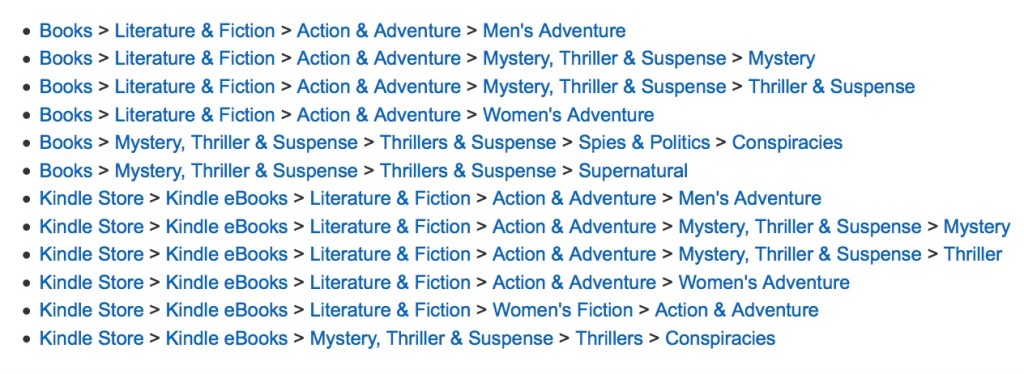
 Book cover. Upload your high-resolution book cover design. You can always replace this later if you want to rebrand.
[Need a book cover designer? Here’s a recommended list.]
Upload your book file. This is the mobi for Kindle or the ePub for other stores. If it works, the upload will be shown as successful. You may get a notification of errors or spelling mistakes. Just fix them and re-upload another file if you need to. Most indies upload new files periodically as we update the back matter and lists of other books inside each book.
Decide on DRM. Digital Rights Management is a way of locking a book to a format. So, people buy this Kindle book and they can only read it on a Kindle device. I don’t enable digital rights management on any platform. As far as I’m concerned, if readers want to read it on another device, they should be able to. So, I always click, “Do not enable digital rights management.” If you want more information on this, check out Cory Doctorow on freedom of expression, DRM, piracy and censorship.
Preview your book. Most of the publishing platforms offer a way to preview your book file as the customer will see it. Amazon’s preview tool offers the view per device, e.g. Kindle Fire vs. iPhone which is great, especially if you have specific formatting/tables/images. If there are problems, no worries. Just fix the file and re-upload.
If you’re going to self-publish ebooks or you are already selling them, then I do recommend that you buy an ebook reader or at least try reading an ebook on one of the many free apps. You need to understand the mindset of an ebook reader as well as their online experience. I read 99% ebooks these days, mostly on the Kindle Paperwhite and my iPhone Kindle app. I mostly download samples before buying, unless I know and trust the author. I also have preferences around pricing, and you will pick these things up if you try reading digitally.
Book cover. Upload your high-resolution book cover design. You can always replace this later if you want to rebrand.
[Need a book cover designer? Here’s a recommended list.]
Upload your book file. This is the mobi for Kindle or the ePub for other stores. If it works, the upload will be shown as successful. You may get a notification of errors or spelling mistakes. Just fix them and re-upload another file if you need to. Most indies upload new files periodically as we update the back matter and lists of other books inside each book.
Decide on DRM. Digital Rights Management is a way of locking a book to a format. So, people buy this Kindle book and they can only read it on a Kindle device. I don’t enable digital rights management on any platform. As far as I’m concerned, if readers want to read it on another device, they should be able to. So, I always click, “Do not enable digital rights management.” If you want more information on this, check out Cory Doctorow on freedom of expression, DRM, piracy and censorship.
Preview your book. Most of the publishing platforms offer a way to preview your book file as the customer will see it. Amazon’s preview tool offers the view per device, e.g. Kindle Fire vs. iPhone which is great, especially if you have specific formatting/tables/images. If there are problems, no worries. Just fix the file and re-upload.
If you’re going to self-publish ebooks or you are already selling them, then I do recommend that you buy an ebook reader or at least try reading an ebook on one of the many free apps. You need to understand the mindset of an ebook reader as well as their online experience. I read 99% ebooks these days, mostly on the Kindle Paperwhite and my iPhone Kindle app. I mostly download samples before buying, unless I know and trust the author. I also have preferences around pricing, and you will pick these things up if you try reading digitally.
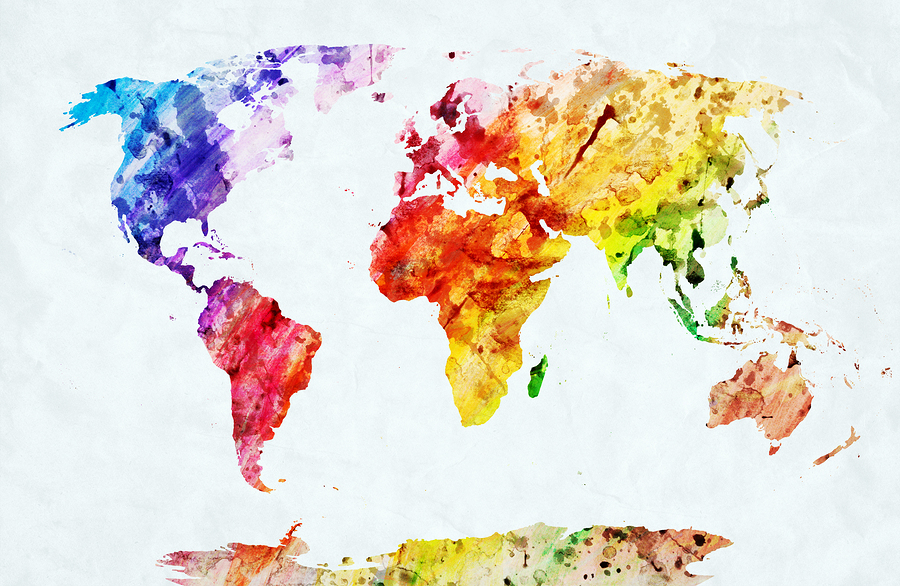 Verify your publishing territories. If you are self-publishing and you hold all the rights, you just click, “Worldwide.” If you are already traditionally published, you may own rights in other territories. For example, say you published with a publisher in the US and sold only the US rights, you could self-publish in the UK or Australia or any other country. You can select individual territories and deselect the ones that you have sold to someone else.
Set your pricing. Most of the stores have country-specific pricing and it’s well worth setting these individually instead of relying on an automatic exchange rate calculation. For example, if you price at US$4.99 and just leave it to automatically calculate for GBP, then readers in the UK might see £3.21, which is an odd price. It’s best to change the UK price to £2.99 or £3.49 which is a price readers are more used to seeing. Amazon has specific price bands for royalties, so you need to price between $2.99 and $9.99, if you want 70% royalty. If you’re pricing below or above that, then it’s 35%. If you’re in KDP Select, it doesn’t make so much of a difference, because you’ll get paid per page read.
Kindle MatchBook. Amazon-specific field. If the print book is available and the customer has already bought the print book, they can get the eBook at a reduced price. I always select this.
Kindle Book Lending. Amazon-specific field that allows readers to lend books to friends and family in specific territories, which I think is a good thing, so I always select this too.
Then essentially, you click Save and Publish. The book will go through processing and within 4-24 hours, it will miraculously appear on the online bookstores. Super exciting!
Verify your publishing territories. If you are self-publishing and you hold all the rights, you just click, “Worldwide.” If you are already traditionally published, you may own rights in other territories. For example, say you published with a publisher in the US and sold only the US rights, you could self-publish in the UK or Australia or any other country. You can select individual territories and deselect the ones that you have sold to someone else.
Set your pricing. Most of the stores have country-specific pricing and it’s well worth setting these individually instead of relying on an automatic exchange rate calculation. For example, if you price at US$4.99 and just leave it to automatically calculate for GBP, then readers in the UK might see £3.21, which is an odd price. It’s best to change the UK price to £2.99 or £3.49 which is a price readers are more used to seeing. Amazon has specific price bands for royalties, so you need to price between $2.99 and $9.99, if you want 70% royalty. If you’re pricing below or above that, then it’s 35%. If you’re in KDP Select, it doesn’t make so much of a difference, because you’ll get paid per page read.
Kindle MatchBook. Amazon-specific field. If the print book is available and the customer has already bought the print book, they can get the eBook at a reduced price. I always select this.
Kindle Book Lending. Amazon-specific field that allows readers to lend books to friends and family in specific territories, which I think is a good thing, so I always select this too.
Then essentially, you click Save and Publish. The book will go through processing and within 4-24 hours, it will miraculously appear on the online bookstores. Super exciting!
A few thoughts on pricing
 This is something that new authors agonize over, but the best thing to remember is:
- You can change the price anytime, so start with something and move it if it’s not working for you.
- The more books you have, the more flexibility you have with pricing, and you won’t be so emotionally attached. It’s hard to put up a book for free if it’s your only one, but when you have seven in a series, it’s not hard at all to put the first at permanently free (permafree), as I did for years with Stone of Fire, the first ARKANE book.
- Consider the value to the customer and what they can get for that price within the same genre. For example, if John Grisham’s latest legal thriller is $4.99, you can’t really price your first legal thriller at $7.99. I have fiction at free, $2.99 for novellas, $4.99 for full-length novels, $6.99-$8.99 for boxsets, $7.99 for non-fiction and then higher prices for other items.
- Free is a marketing strategy, in the same way that offering samples of cheese or wine in shops helps people to discover new tastes, so they might go on to buy the rest of the product. It’s very useful when you have a series, as it can lead people into buying the rest of the books. If you want to make a book permafree, then you need to price it for $0 on stores that allow this: Kobo, iBooks, Smashwords, Draft2Digital, and then wait for Amazon to price match to $0.
- Kobo and Apple iBooks both have the capability to schedule pricing promotions so you can set and forget and the price will revert after a discount period. With Amazon, you have to change it to the discount price and then go back in and change it back after the discount period is over, unless you’re in KDP Select (exclusive) when you can schedule the promotion.
EU VAT tax:
In Dec 2014, a law was brought in across the EU that meant sales of digital products, including ebooks, would now be subject to Value Added Tax based on the country of the customer, not the supplier. The law was aimed at stopping companies like Amazon, Google and Apple from situating their companies in countries with specific tax breaks to lower their tax in other countries. But of course, it hit every author and small business selling digitally. This tax is now spreading to other countries, so we can assume it will be part of the global digital marketplace going forward. It affects you because this tax is now included in your list price so you will be paid less per book, but all the technical stuff is handled by the distributor i.e. Amazon, Kobo, iBooks etc. For more information, check this Amazon help page on EU VAT. What about piracy?
I always get asked about piracy when I speak about ebooks. There are a few things to consider.
 What about piracy?
- Most readers are not pirates. Most readers are wonderful people who are happy to support authors. Why miss out on the real market for fear of the pirates?
- Piracy will happen if your book is popular. There’s really no way of stopping it, but what do you think the most pirated books are? Harry Potter and other big sellers, of course, and does that impact their sales? Most people who pirate books are not going to be your readers anyway. It’s more important to consider obscurity, then piracy. More authors suffer from being completely unknown than from being famous enough to be significantly pirated.
- Some authors have used piracy as a marketing tool. Paulo Coelho, author of The Alchemist, released his book in Russia on the pirate sites and his sales picked up after word spread about him. Tim Ferriss launched The Four Hour Chef with a promotion on Bit Torrent which resulted in massive sales.
-
 Stay aware just in case. You can set up alerts with sites like mention.net around your book title or lines from your book. There are ways to get your books taken down, but in my experience, they pop up again all over the place. If you are seriously worried, then check out The Self-Publisher’s Legal Handbook by Helen Sedwick.
OK, we’re done. Now you can go and self-publish an ebook!
Click here for more articles on publishing including traditional publishing vs self-publishing and how to self-publish a print book, audiobook and more. You can also get the ebook, Successful Self-Publishing for free on all ebook stores and also in print. Need more help?
Click here to sign up for my Author 2.0 Blueprint and receive a free ebook and video series, along with regular emails that will help you on your author journey.
Or, if you prefer audio, check out The Creative Penn podcast for your weekly information and inspiration on writing, publishing, book marketing and creative entrepreneurship.
If you have any questions, tweet me @thecreativepenn
These decisions, and the rest of the publishing process, are covered step by step in Successful Self-Publishing.